AI Interior Design for Renters: What You Can Actually Change
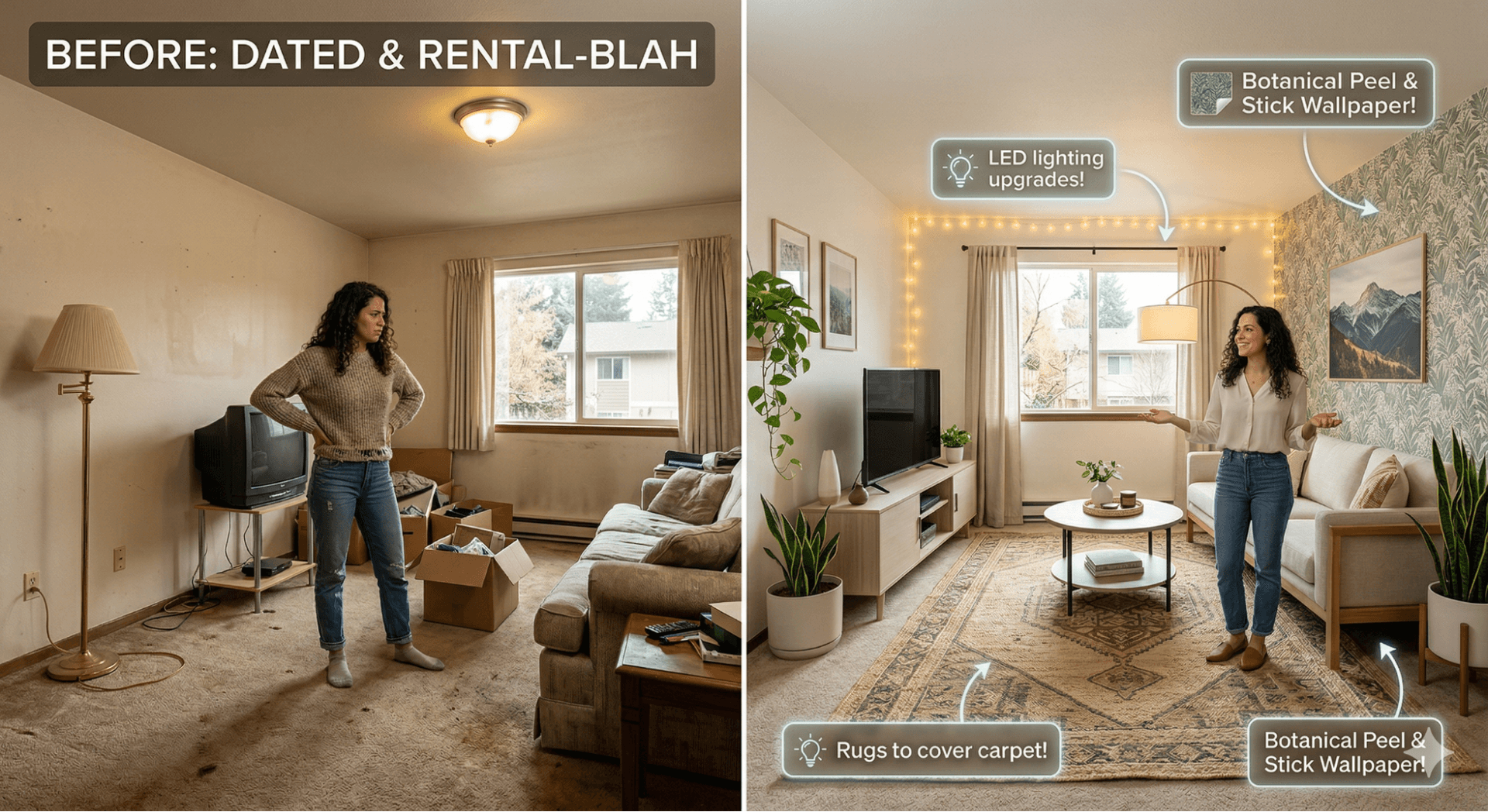
You're staring at beige walls. Ugly carpet. Mismatched lighting. Your landlord's dated design choices surround you, and you can't change any of it. Or can you?
The truth about renting and interior design: You have more power than you think. And with AI interior design tools, renters can visualize dramatic transformations before spending a single dollar.
This guide shows you exactly what you can change in a rental apartment — and what's off-limits. More importantly, it shows you creative renter-friendly design strategies and how AI tools help you design confidently within constraints.
Design Constraints for Renters
Renting comes with constraints that homeowners never face. But constraints breed creativity.
The core renter reality:
- Can't paint permanently
- Can't remove or install fixtures
- Can't modify flooring or carpet
- Can't alter structural elements
- Can't make permanent wall changes
- Risk losing security deposits over damage
- May need landlord approval for changes
But here's what makes modern renter design possible: Temporary solutions have evolved dramatically. Removable wallpaper, damage-free adhesive strips, and modular furniture have created a new category of renter-friendly design. The key is knowing the line between "renter-friendly" and "deposit-risking."
What You CAN Change: The Full Renter Design Toolkit
Furniture & Arrangement
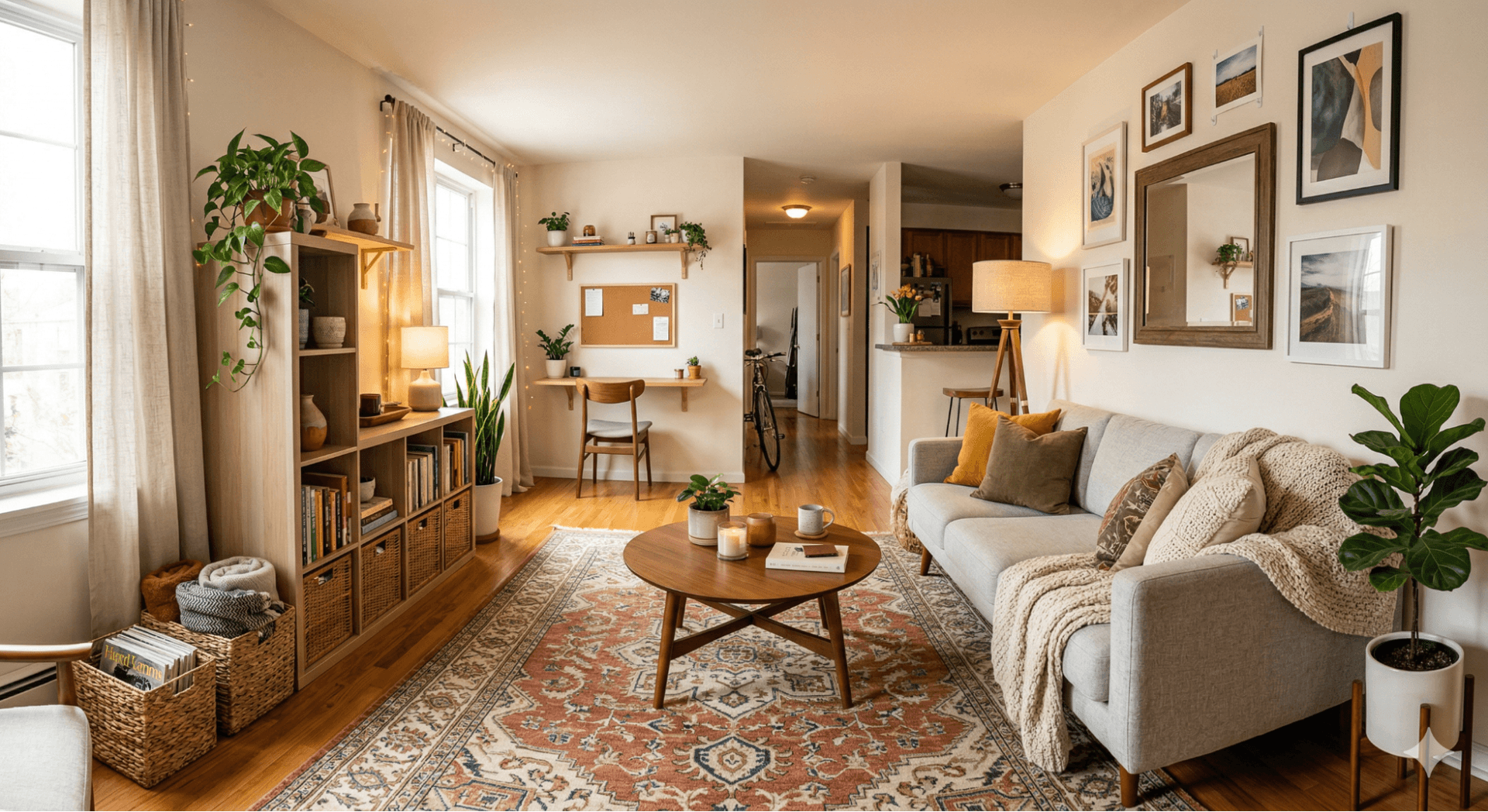
Complete control. You own it. You arrange it. No permission needed.
- Buy or rent furniture that fits your style
- Arrange layouts strategically
- Add seating, storage, or decorative pieces
- Float furniture away from walls (makes space feel larger)
- Replace or upgrade furniture as budget allows
Textiles & Soft Furnishings
Full authority. Bedding, curtains, rugs, pillows, throws, blankets — all yours to control.
- Completely change room aesthetics through textiles
- Layer rugs for defined spaces
- Update curtains without landlord involvement
- Use throw pillows to add color and pattern
- Add texture through blankets and wall tapestries
Wall Décor (Non-Permanent)
Mostly yours. Wall art, mirrors, shelves (hung properly), and temporary wall hangings are fair game.
- Hang framed art (damage-free hanging strips)
- Install floating shelves (with proper wall anchors)
- Add large mirrors (doubles light, expands space)
- Hang tapestries or fabric wall art
- Use removable wallpaper (key: removable, not permanent)
Renter caveat: Know your wall type (drywall vs plaster). Use damage-free adhesive strips. Document original wall condition with photos before making any changes.
Plants & Greenery
- Buy any plants that fit your light conditions
- Arrange in corners, on shelves, hanging from hooks
- Create plant corners or botanical displays
- Hang plants from ceiling hooks (with landlord approval for hook placement)
- Group plants for visual impact
Lighting (Non-Structural)
Control what you can. Overhead lights are fixed, but everything else is fair game.
- Add floor lamps (no installation required)
- Add table lamps on nightstands and surfaces
- String lights for ambiance (if no permanent attachment)
- Swap light bulb colors (2700K = warm and cozy)
- Add desk lamps for task lighting
Storage & Organization
- Add shelving units (freestanding, no wall mounting)
- Use baskets and organizers (hidden clutter)
- Floating shelves with damage-free hangers
- Under-bed storage (reclaims floor space)
- Over-door organizers and hooks
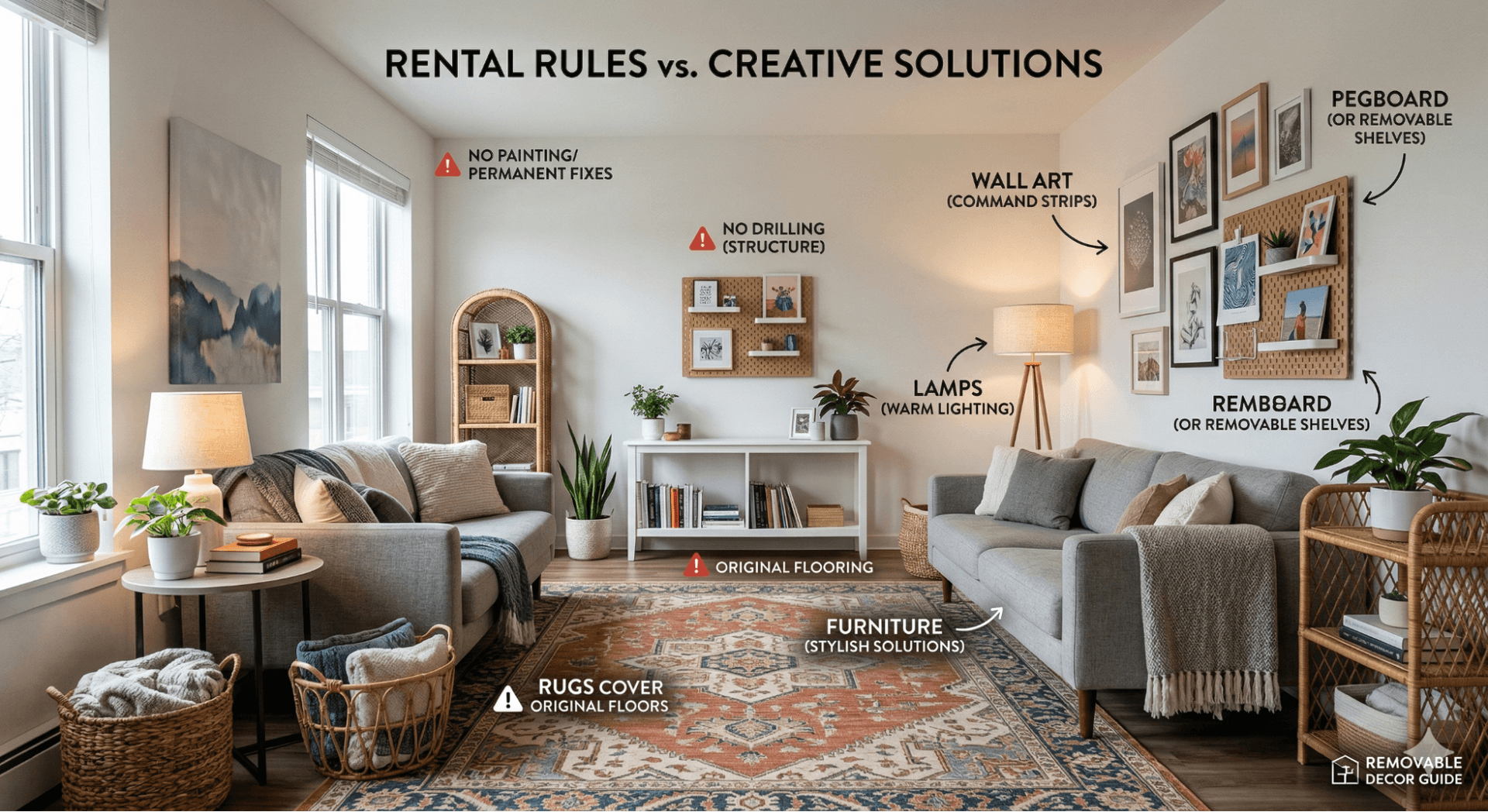
What You CANNOT Change: Hard Boundaries
Paint & Wall Color
Off-limits. Permanent wall paint requires returning walls to original condition — expensive and time-consuming. The alternative: Removable wallpaper, wall tapestries, and large artwork create color impact without permanent changes.
Flooring & Carpet
Off-limits. Ripping up carpet or replacing flooring violates lease agreements. The alternative: Area rugs, runners, and carpet tiles (peel-and-stick versions) add color and texture safely.
Fixtures & Hardwired Systems
Off-limits. Light fixtures, exhaust fans, electrical outlets, plumbing fixtures — all stay. The alternative: Work around existing fixtures with temporary lighting and storage solutions.
Structural Elements
Off-limits. Removing walls, adding doors, modifying ceilings — all forbidden. The alternative: Use furniture and room dividers to create zone separation without structural changes.
Temporary Design Solutions: Renter Hacks That Actually Work
Removable Wallpaper (The Game-Changer)
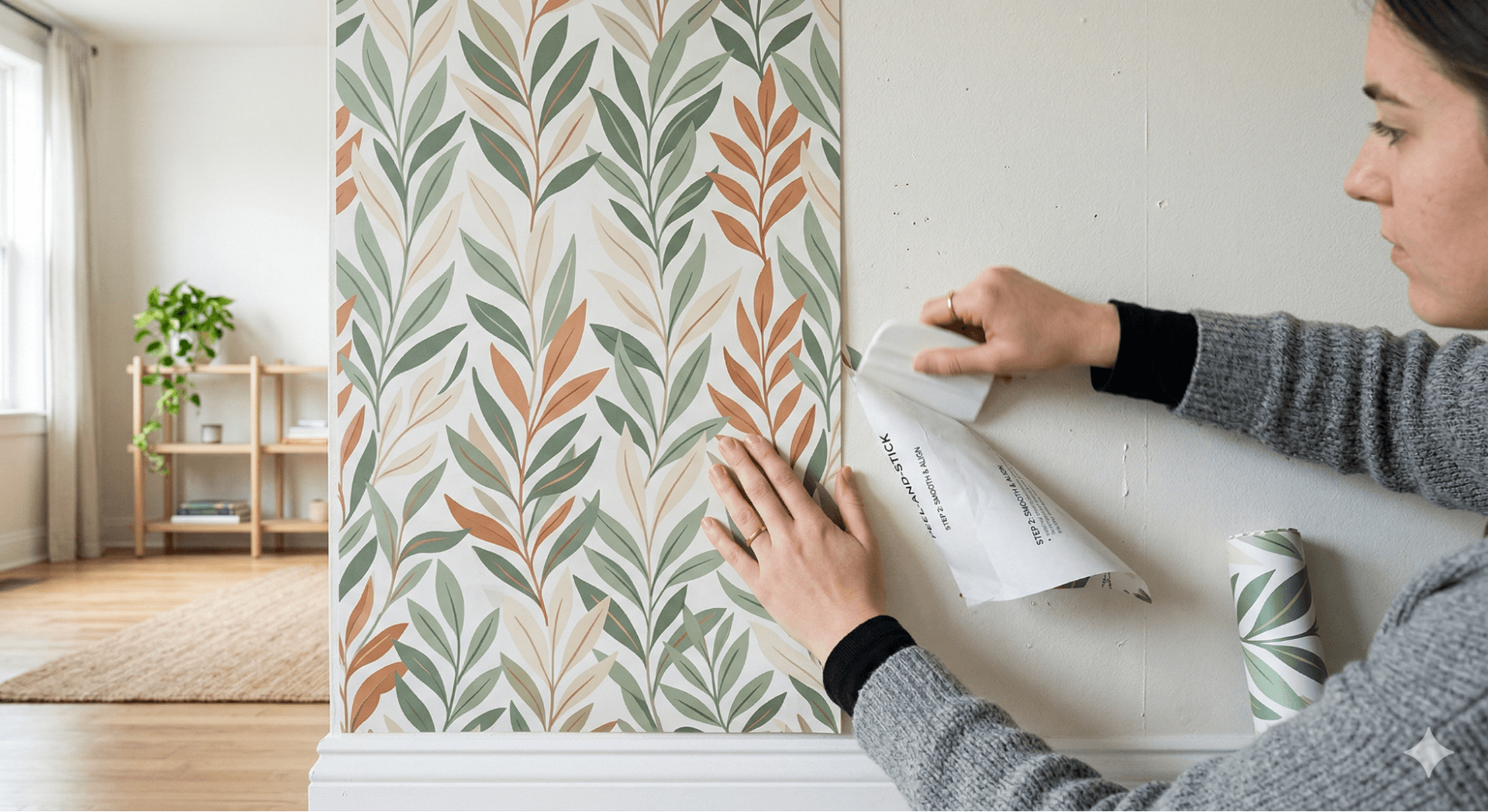
What it is: Peel-and-stick wallpaper that removes cleanly without damaging walls. Why it works for renters:
- Completely removable (leaves no residue)
- Creates dramatic color/pattern impact
- Landlord-approved alternative to paint
- Costs $15–$40 per roll
- Application takes 2–4 hours per wall
Best use: One accent wall for color impact or entire room for bold statement. Application tip: Practice on small section first. Measure carefully. Try Decory AI to preview how removable wallpaper would look in your rental before purchasing.
Damage-Free Hanging Solutions
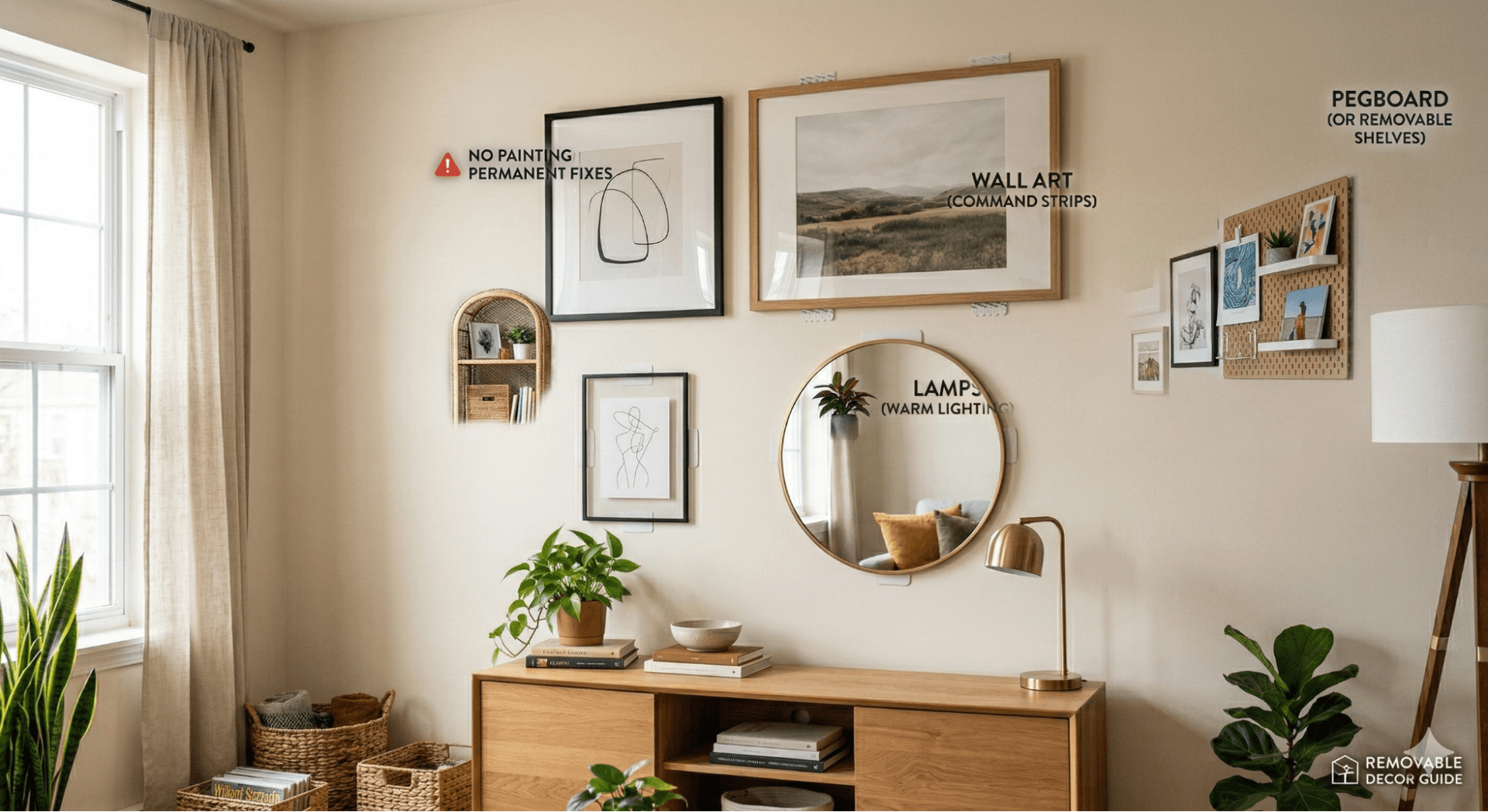
What they are: Adhesive strips, hooks, and anchors that remove without wall damage. They hold 5–15 lbs depending on type, remove cleanly, cost $2–$10 per set, and work on most wall types. Best use: framed art, floating shelves, mirrors, and lightweight décor.
Area Rugs & Runners
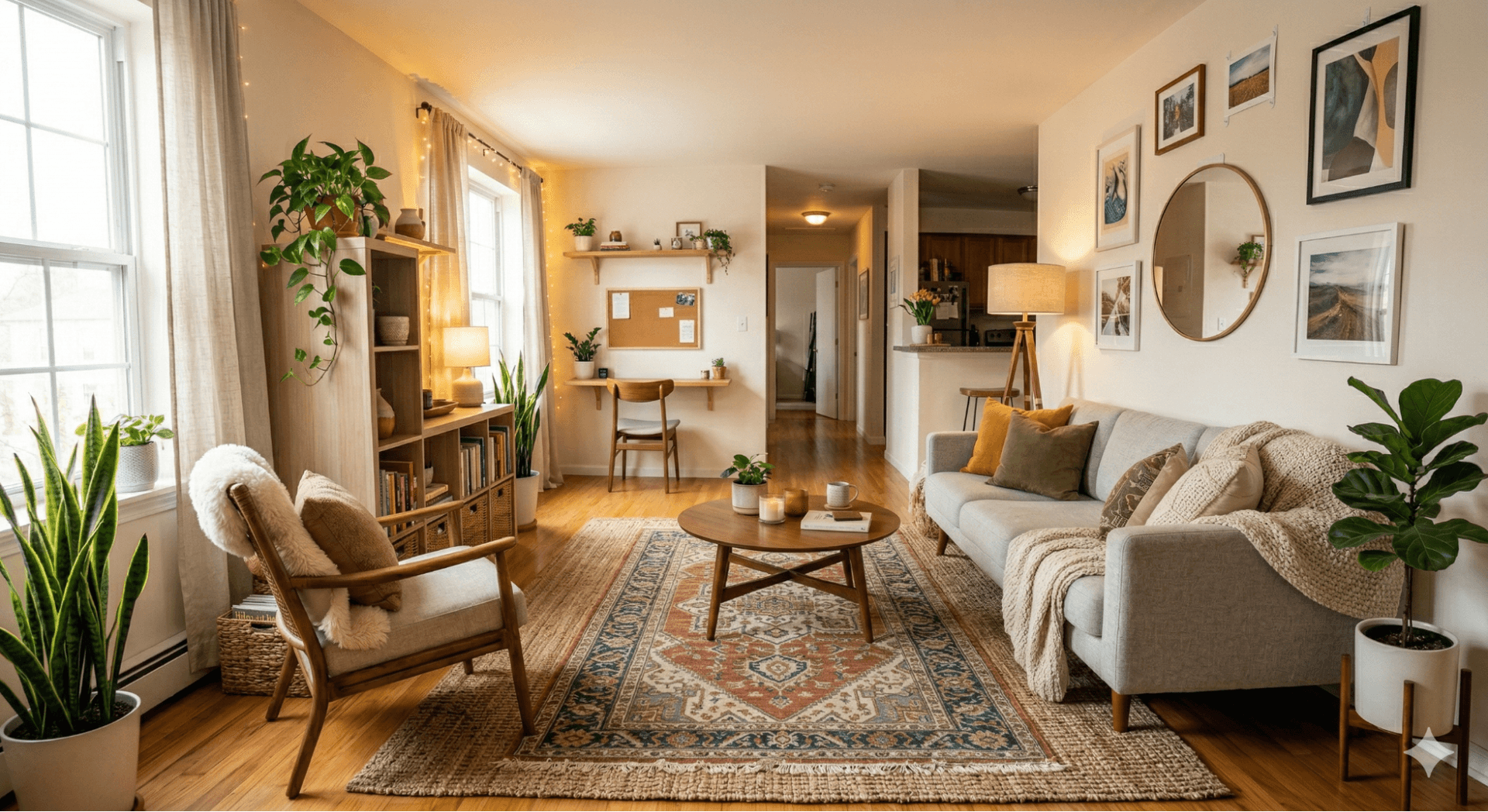
Area rugs dramatically change how a space looks, protect rental carpeting underneath, define room zones, and cost $30–$300 depending on size and quality. Best use: Layering (jute base rug + patterned runner on top) creates visual interest and intentionality.
Furniture as Room Divider
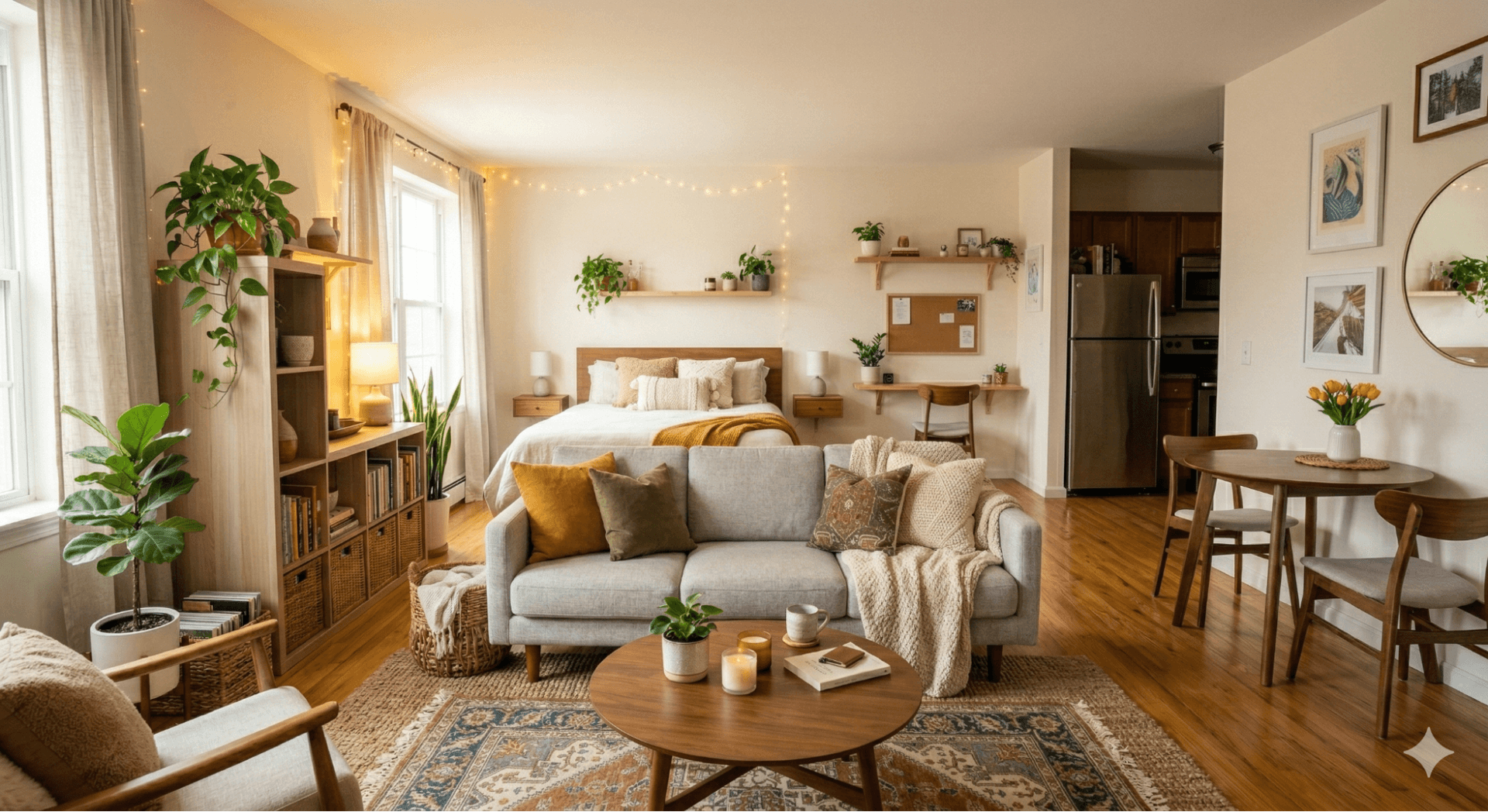
Strategic furniture placement creates zones without walls. Floating a sofa creates separation between zones, a tall bookshelf visually divides space, and no permanent changes are required. Best use: Small apartments where sleeping area and living area share space.
Removable Hooks & Shelves
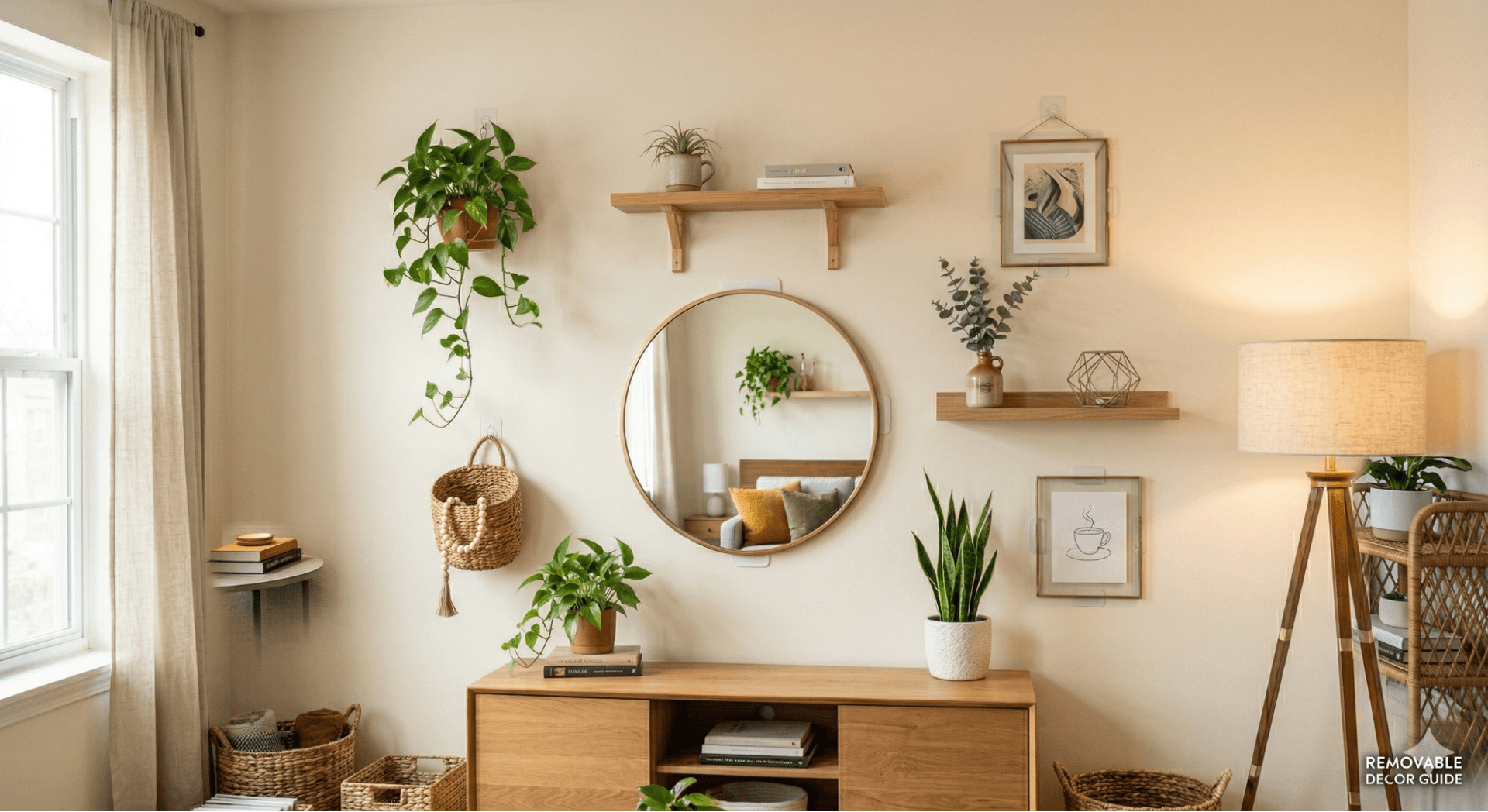
Adhesive-backed hooks and floating shelves designed for renters hold lightweight items safely, remove completely without damage, and cost $5–$30. Best use: plant hooks, floating shelves for decorative items, towel hooks in bathrooms, display shelves for collections.
Furniture-First Design Approach
Renters must think furniture-first, paint-second. Furniture is your primary design tool.
The Renter's Design Hierarchy
1. Furniture (80% of design impact):
- Sofa color and style
- Bed frame and headboard
- Storage pieces
- Dining furniture
- Accent chairs
2. Textiles (15% of design impact):
- Bedding and pillows
- Curtains and window treatments
- Rugs and runners
- Throw blankets and pillows
3. Temporary Wall Changes (5% of design impact):
- Art and mirrors
- Removable wallpaper
- Tapestries
- Wall décor
Strategic Furniture Selection for Renters
Choose furniture that:
- Reflects your style (you'll take it to your next place)
- Works in multiple layouts (apartments change)
- Functions across style changes (trends evolve)
- Quality-build (durability for moves)
- Neutral enough to work anywhere (but with personality through styling)
Color & Décor Without Paint
Color Strategy for Renters (No Paint Required)
Layer color through:
- Large art pieces (gallery wall effect)
- Colorful textiles (bedding, pillows, throws)
- Patterned rugs (anchor color palette)
- Plants and greenery (natural color)
- Decorative objects (books, ceramics, plants)
- Removable wallpaper (accent wall color impact)
Décor Layers That Transform Spaces
Layer 1 — Foundation (Furniture): Neutral furniture provides clean base for color layering. Layer 2 — Textiles (Color Introduction): Bedding, rugs, and curtains introduce primary colors. Layer 3 — Wall Art (Visual Interest): Framed art, mirrors, and wall décor create focal points. Layer 4 — Accessories (Personality): Plants, books, collections, and small décor add finishing touches. Result: Fully designed space with zero permanent changes.
Before & After: 10+ Renter Transformations
Transformation #1: The Blank Beige Apartment
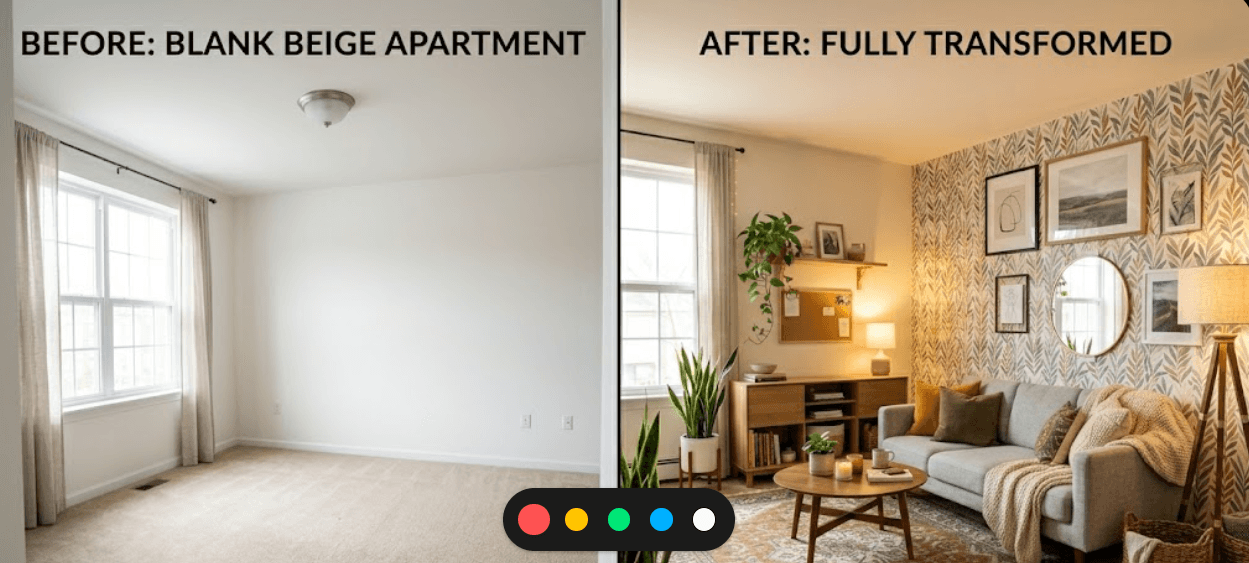
Before: White walls, beige carpet, minimal furniture, felt depressing and temporary. Changes: New sofa (gray), removable wallpaper accent wall (terracotta), large mirror, plants, colorful pillows, artwork, area rug. Cost: $1,200. Time: 3 days. Result: Warm, designed space that feels intentional despite rental constraints.
Transformation #2: The Boring Bedroom
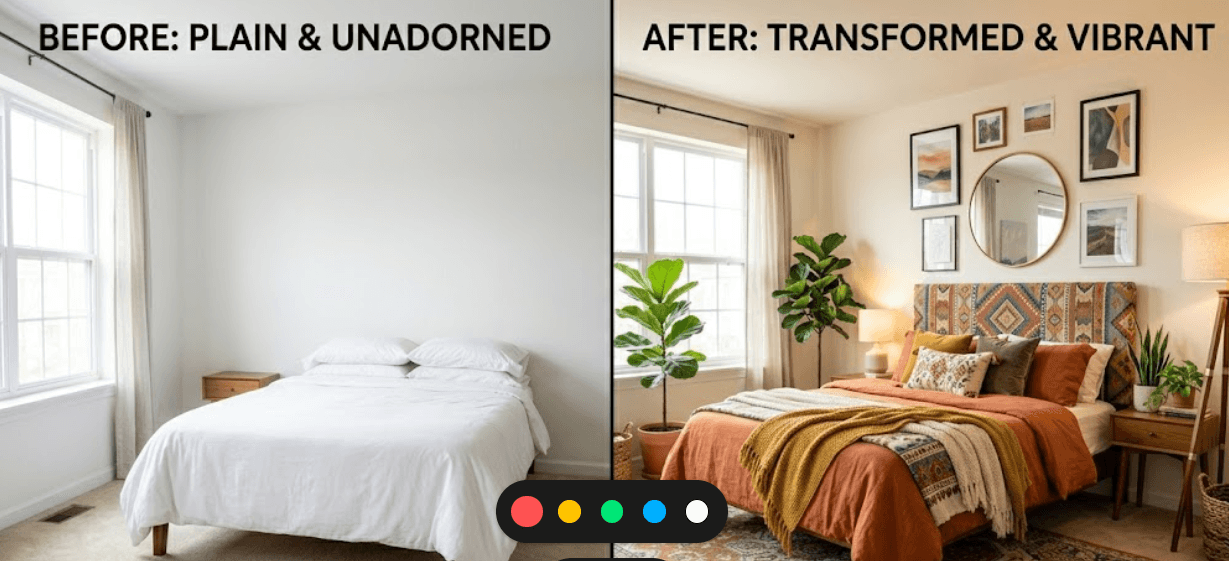
Before: White walls, plain bedding, no personality, felt like a hotel room. Changes: Colorful bedding set, wooden headboard (no wall mounting), floating nightstands (no drilling), plant corner, wall art. Cost: $400. Time: 1 weekend. Result: Bedroom transformed into personal sanctuary through textiles and styling.
Transformation #3: The Cramped Studio
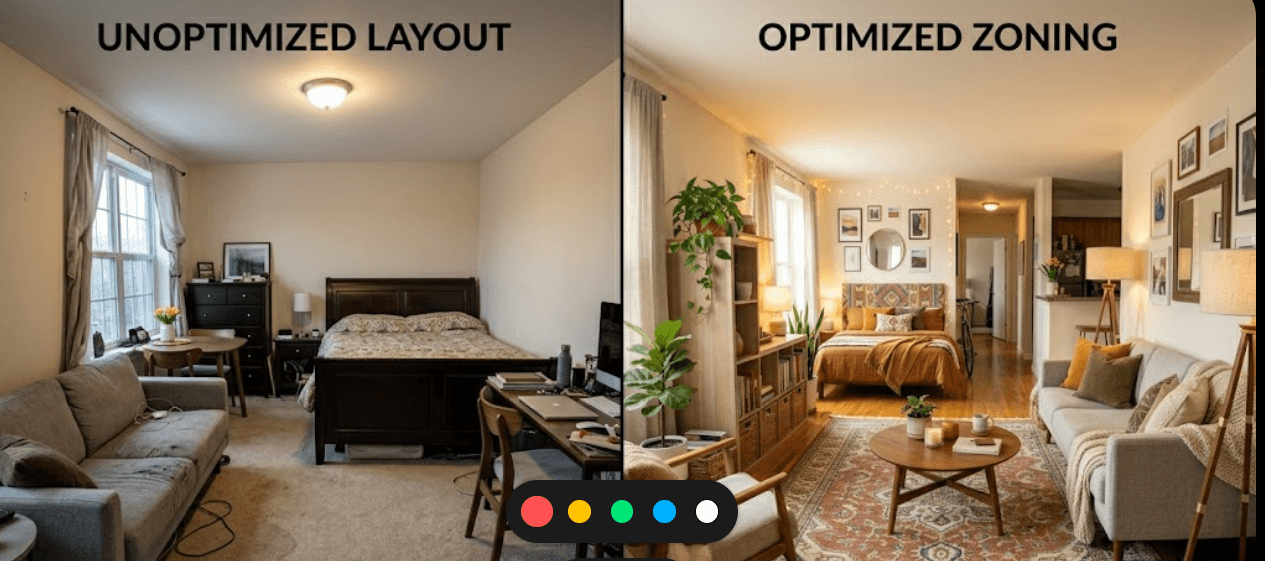
Before: 280 sq ft, furniture crammed against walls, no zone separation, felt chaotic. Changes: Floating furniture, area rug (defined living zone), room divider (inexpensive standing screen), vertical storage. Cost: $300. Time: 4 hours. Result: Studio feels intentionally designed, zones clearly separated.
Transformation #4: The Renter's Kitchen Makeover
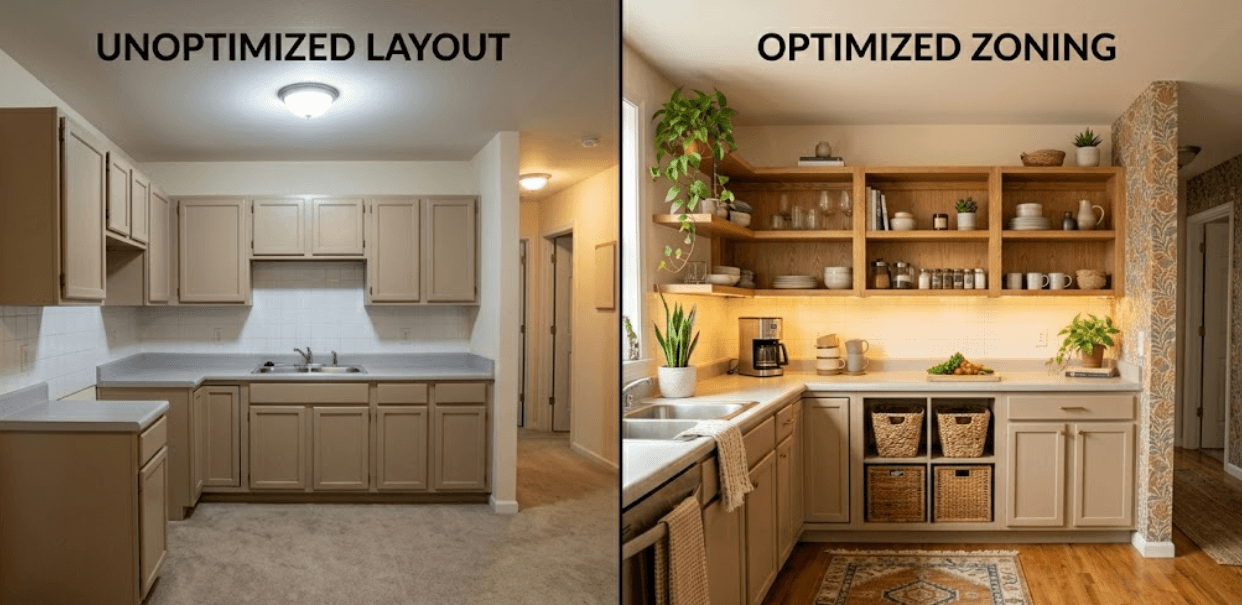
Before: Beige cabinets, no personality, generic apartment kitchen. Changes: Removable wallpaper on one wall, open shelving styling, colorful dishes displayed, plants on windowsill, under-cabinet lighting. Cost: $150. Time: 1 day. Result: Kitchen transformed from blah to designed without touching cabinets.
Transformation #5: The Dark Corner Apartment
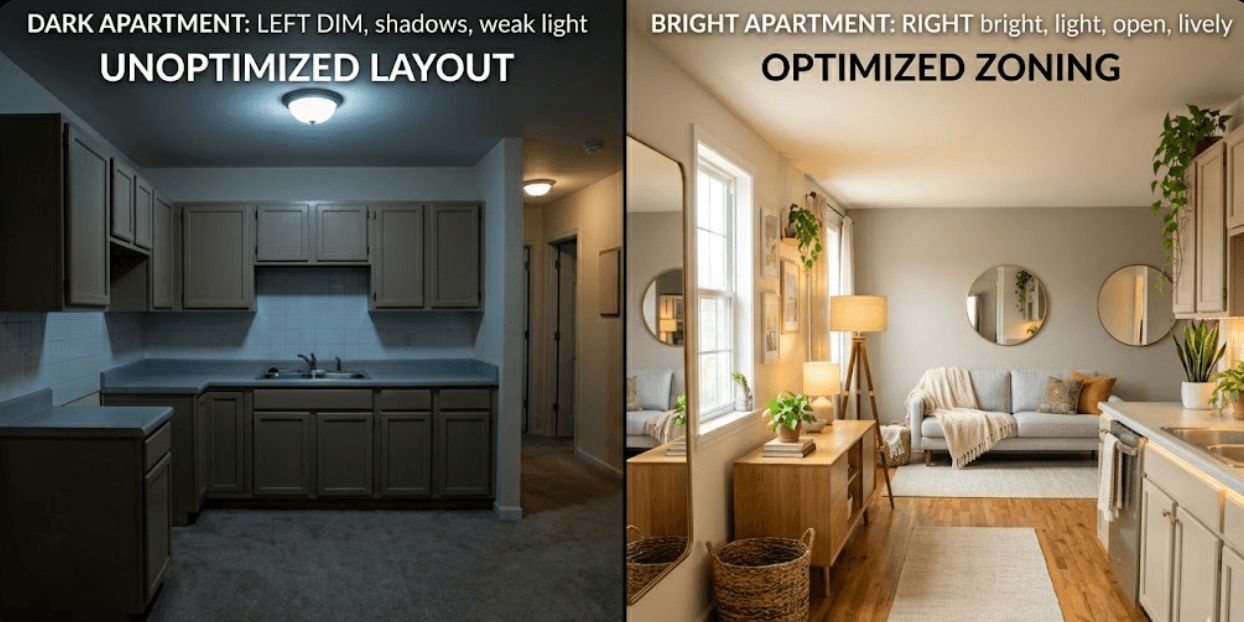
Before: North-facing windows, dim lighting, space felt cave-like. Changes: Large mirrors opposite windows (doubled light perception), light-colored textiles, additional lamps. Cost: $350. Time: 2 days. Result: Space felt 30% brighter and more spacious through strategic lighting and mirrors.
Transformation #6: The Temporary-Feeling Apartment
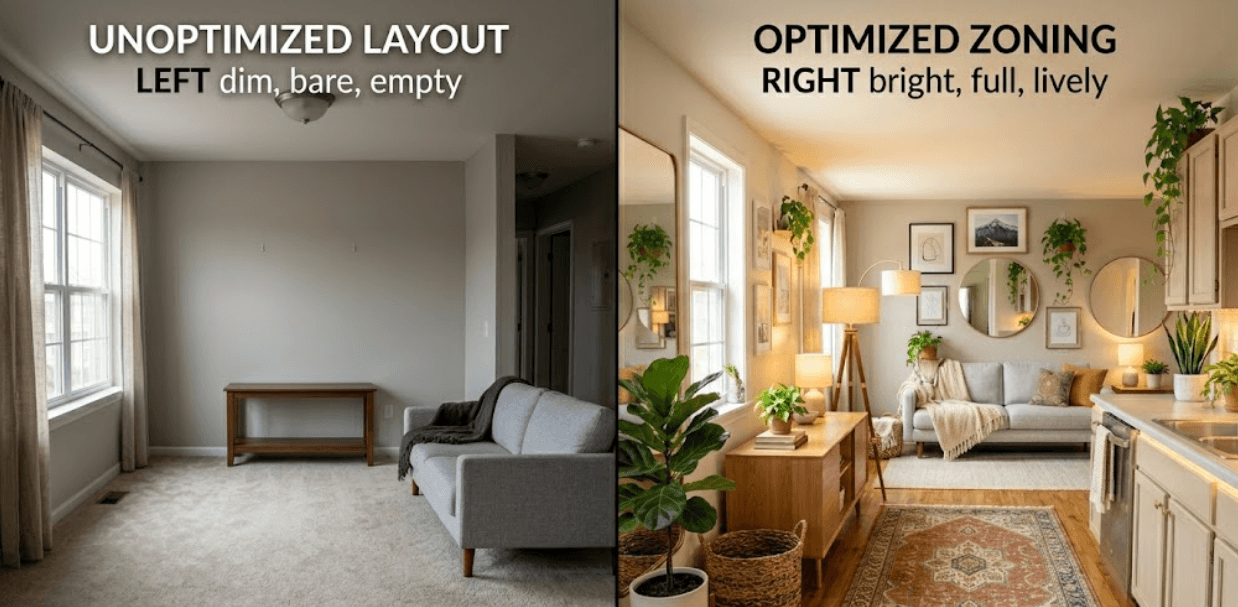
Before: Minimal furniture, bare walls, looked like person was moving tomorrow. Changes: Hung art (10-piece gallery wall), added plants (5+), colorful textiles, floating shelves, decorative objects on display. Cost: $500. Time: 3 days. Result: Apartment felt like curated home, not temporary housing.
Transformation #7: The Multi-Zone Studio
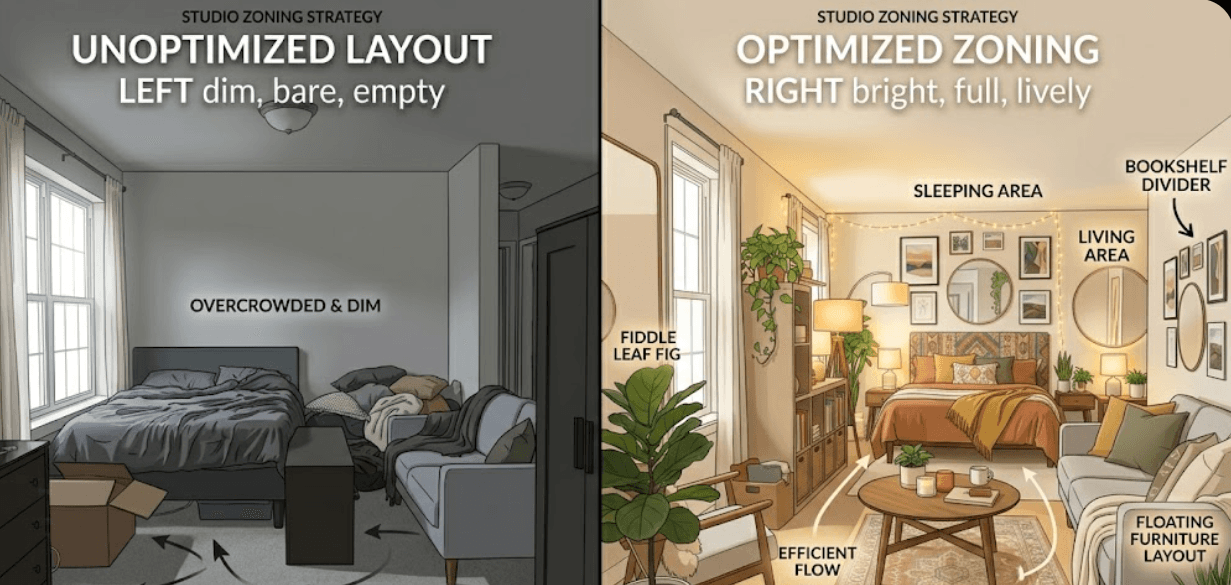
Before: Bed dominated one corner, living area cramped in 200 sq ft, no functional separation. Changes: Floating furniture, area rug defined living zone, tall bookshelf created visual division, zone lighting differentiated areas. Cost: $400. Time: 1 weekend. Result: Studio functionally separated into sleeping and living zones despite open floor plan.
Transformation #8: The Color-Hungry Renter
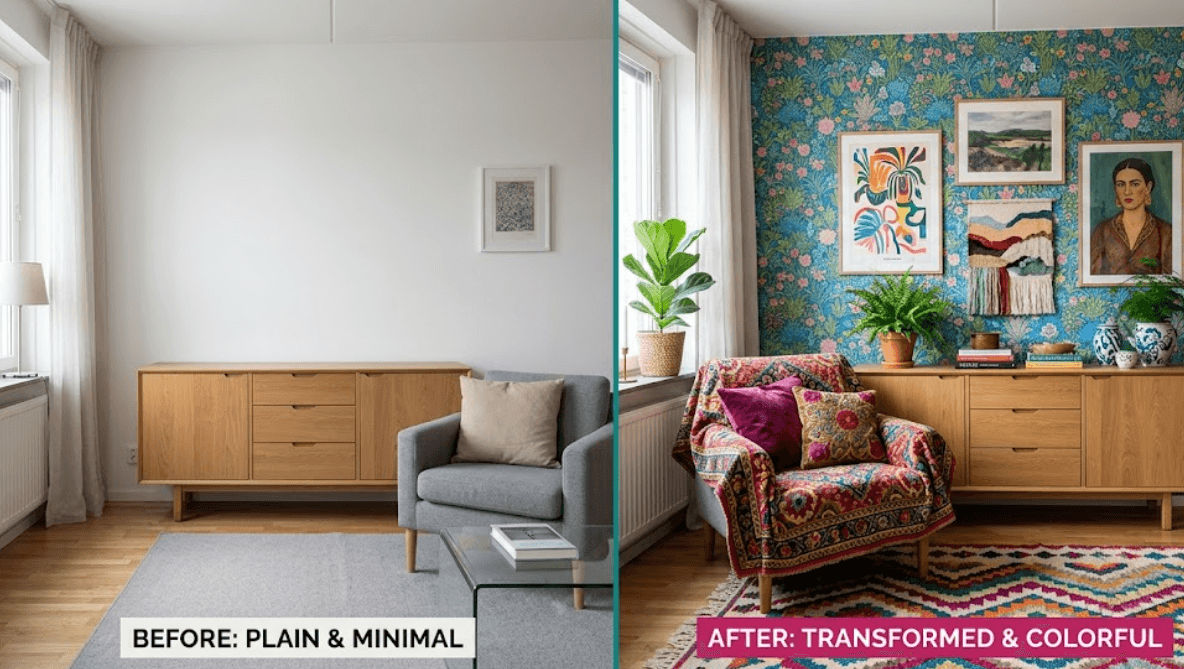
Before: Landlord insisted on white walls, renter wanted color and personality. Changes: Removable wallpaper (one accent wall), colorful art collection, patterned textiles, colorful throw pillows. Cost: $300. Time: 3 days. Result: Full color design achieved through removable solutions, zero landlord conflict.
Transformation #9: The Small Bedroom Sanctuary
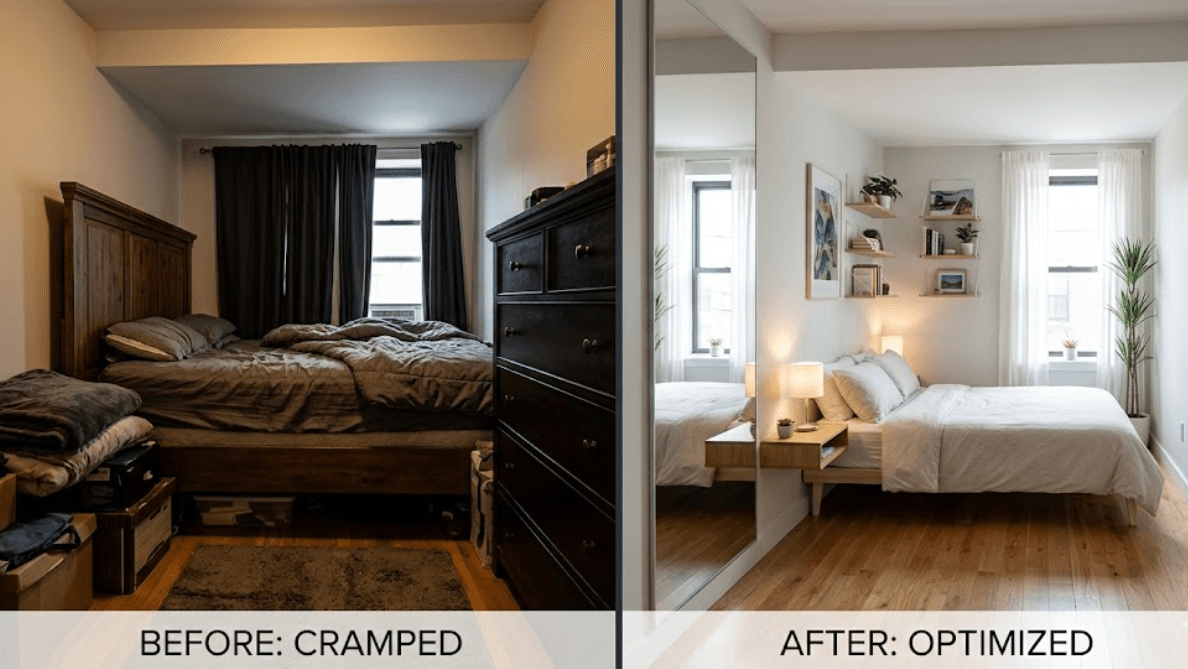
Before: 10x11 bedroom felt cramped, low ceilings emphasized limited height. Changes: Tall plants and vertical art (drew eyes upward), floating nightstands (opened floor space), light colors, mirrors (expanded perception). Cost: $250. Time: 1 weekend. Result: Small bedroom felt intentionally designed and surprisingly spacious.
Transformation #10: The Rentee's First Apartment
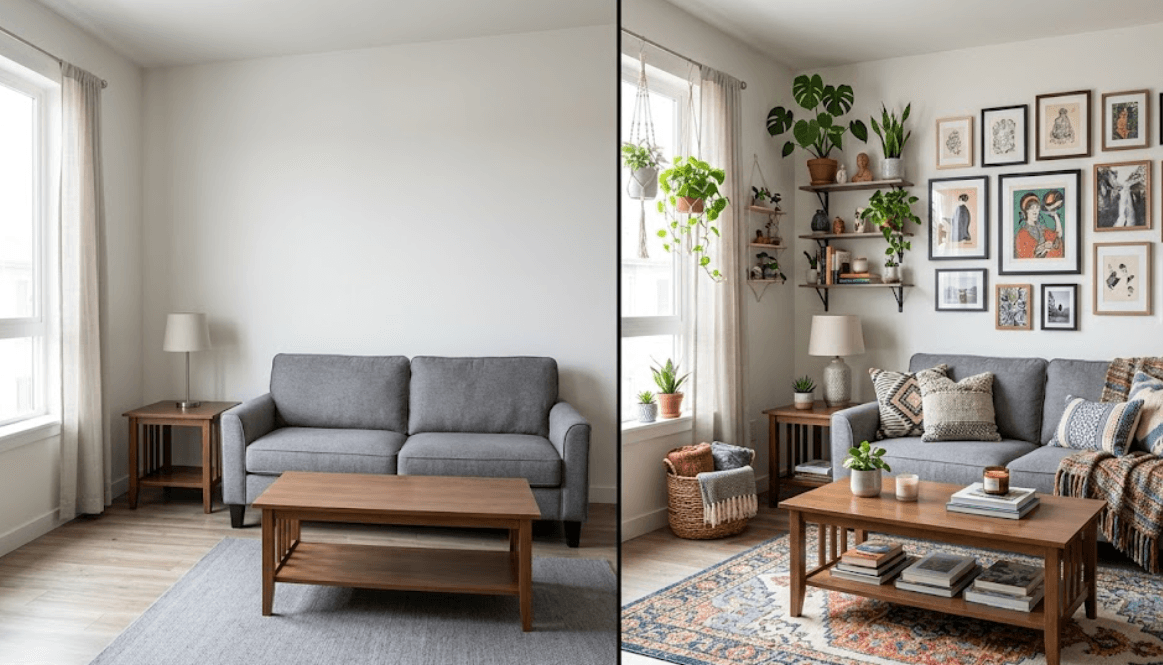
Before: Generic furniture, blank walls, looked like move-in temporary state. Changes: Gallery wall, plants (created botanical feel), textiles (colorful bedding), floating shelves, decorative objects. Cost: $600. Time: 1 week. Result: First apartment transformed into home despite rental status.
Budget-Friendly Renter Design Ideas
The $300 Starter Makeover
- Area rug (100–150 sq ft): $80–$120
- Colorful pillows & throws: $80
- Wall art (thrifted or affordable): $40
- Plants (small/propagated): $20
- Removable wallpaper (partial wall): $60
The $500 Intermediate Makeover
- Better quality furniture piece (affordable sofa or bed frame)
- Additional plants
- Floating shelves (damage-free)
- Better quality art
The $1,000 Complete Makeover
- Quality furniture piece ($400–$500)
- Area rug ($150–$200)
- Textiles & throws ($150)
- Wall art & mirrors ($100)
- Plants & accessories ($100)
Money-Saving Renter Design Hacks
Buy secondhand furniture: Facebook Marketplace, Craigslist, local thrift stores have quality pieces 50–70% cheaper than retail. Thrift art & décor: affordable art and decorative objects for $2–$15 at thrift stores. Propagate plants: free plants from cuttings of friend's plants. DIY art: Print favorite images at FedEx Office ($0.50–$2 each), frame in affordable frames ($3–$10). Swap with friends: furniture and décor exchanges save money while refreshing spaces.
How AI Helps Renters Design Safely
Why AI Design Tools Are Perfect for Renters
Traditional design process: Hire designer ($$$) → decisions take weeks → furniture purchased → maybe it works. AI design process: Upload photo → see 10+ designs in minutes → visualize actual changes → buy with confidence. The renter advantage: AI lets you test ideas without commitment.
Use AI to Preview Temporary Design Solutions
AI can show:
- How removable wallpaper changes room feel
- Where furniture floats best
- Color combinations that work with existing elements
- Lighting improvement through strategic placement
- Storage solutions that maximize space
Result: Confident design decisions without landlord conflict risk.
Frequently Asked Questions
Can renters paint walls? Generally no — permanent paint violates lease terms and risks security deposit loss. However, some landlords allow it if walls are restored before moving out. Use removable wallpaper as the safe alternative.
What renter design changes need landlord approval? Typically: painting, drilling holes, removing fixtures, installing permanent items, ceiling hook placement. Furniture, textiles, plants, and damage-free wall décor do not need approval.
How do I decorate without damaging walls? Use damage-free adhesive strips for art and lightweight shelves, removable wallpaper for color impact, large freestanding mirrors, and tapestries hung from curtain rods.
Can AI help design rental spaces? Yes, absolutely. AI excels at rental design because it visualizes removable changes (furniture, rugs, lighting, temporary wallpaper) without suggesting permanent modifications.
What's the cheapest way to transform a rental? Furniture rearrangement ($0), thrifted textiles and art ($100–$300), removable wallpaper on one accent wall ($60–$120). Combined, these create dramatic transformation for under $500.
Can I take my design changes when I move? Furniture, textiles, art, plants, and removable wallpaper are yours — take them. Floating shelves installed with damage-free anchors can also be removed. Only permanent fixtures stay.
The Bottom Line: Renters Have More Design Control Than They Think
Rental constraints don't mean design compromise. They mean working smarter — investing in furniture you'll own, using removable solutions for color and pattern, and leveraging AI to visualize before you buy.
The renter advantage: Your design belongs to you. Take it to your next place. Build your style over time. That's something homeowners tied to one space can't claim.
The AI advantage: Test designs before buying. Visualize changes in your actual space. Make confident decisions. No regrets. Your rental doesn't define your design. You do. Now design it.
Ready to Transform Your Space?
Use Decory's AI-powered design tools to visualize your transformation. Upload a photo and explore endless possibilities in seconds.
Try Decory AI Now