Back to Blog

Home Office Design: Productivity Meets Style with AI

10 min read
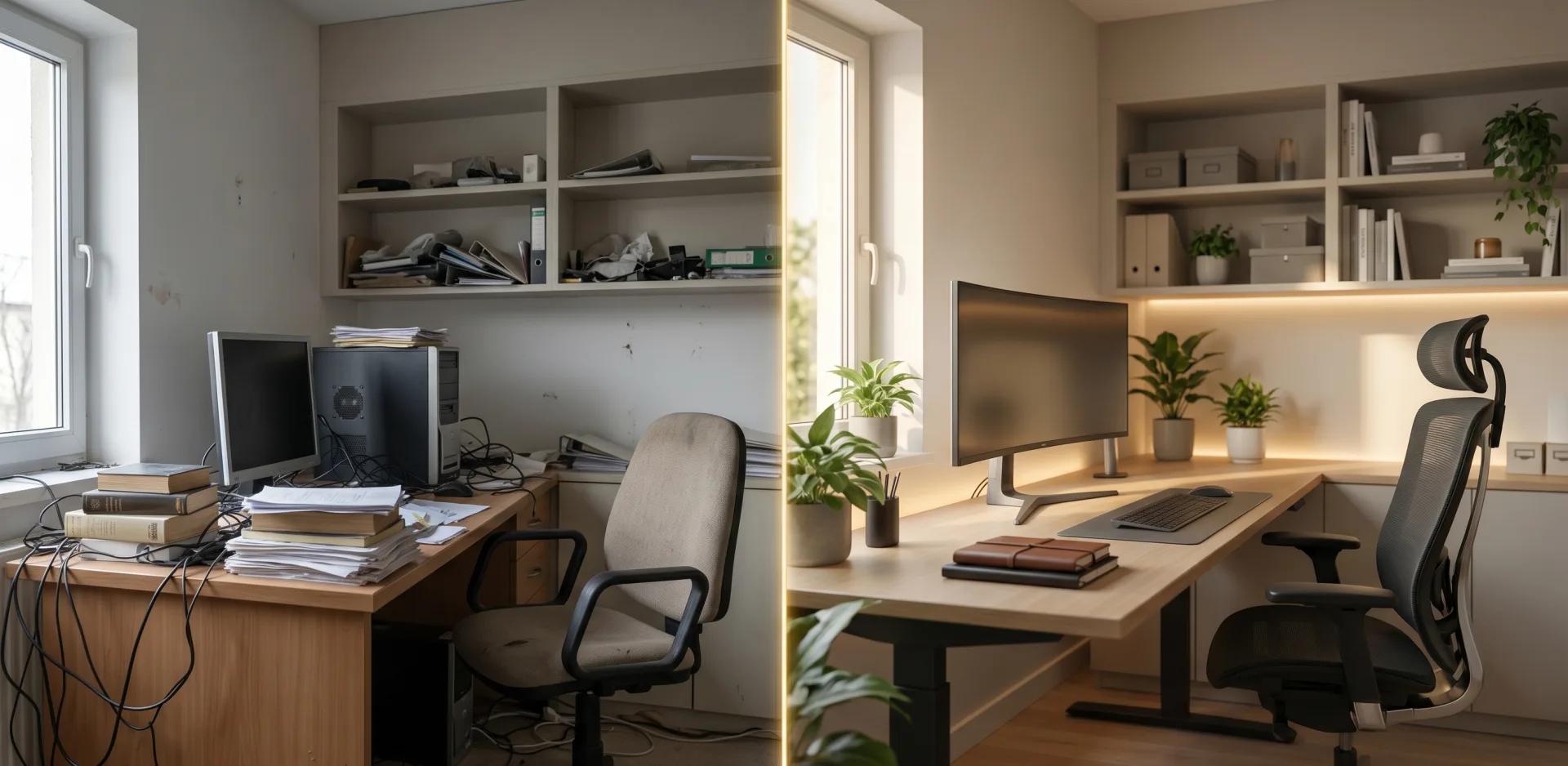
Home Office Design with AI

The home office has become a central part of modern life. Whether you work remotely full-time, run a side business, or need a dedicated space for occasional work, your home office should be both functional and inspiring. With AI design tools, you can create a workspace that boosts productivity while reflecting your personal style.

The Modern Home Office Challenge

Designing a home office requires balancing multiple factors: functionality for work tasks, ergonomics for health, aesthetics for inspiration, and integration with your home's overall design. This balance is where AI design tools excel, helping you visualize and optimize all these elements together.

A well-designed home office should feel separate from your living space while still feeling like home. It should inspire productivity without feeling sterile, and accommodate your work needs while maintaining style.

Essential Elements of Productive Home Office Design

1. Optimal Layout and Flow

The layout of your home office directly impacts productivity. Your desk should face natural light when possible, with your computer screen positioned to avoid glare. There should be clear pathways and enough space to move comfortably.

AI design tools can analyze your space and suggest optimal desk placement, ensuring you have proper lighting, adequate space, and good flow. The AI considers how you'll move through the space and where you'll need access to different areas.

2. Ergonomic Furniture

Comfort is crucial for productivity. Invest in an ergonomic chair that supports your back, and a desk at the right height. Your monitor should be at eye level, and your keyboard and mouse positioned to prevent strain.

AI can help you visualize how different furniture pieces work in your space, ensuring you have room for ergonomic setups while maintaining style. The AI can suggest standing desk options, monitor arms, and other ergonomic solutions that fit your space.

3. Effective Storage Solutions

Clutter kills productivity. Your home office needs smart storage solutions that keep everything organized and accessible. Think vertical storage, filing systems, and hidden compartments that maintain a clean, professional appearance.

AI design tools can suggest storage solutions tailored to your space and needs, showing you how to maximize storage while keeping the office looking organized and stylish.

4. Proper Lighting

Good lighting is essential for both productivity and eye health. Combine natural light with task lighting for your desk and ambient lighting for the overall space. Avoid harsh overhead lights that cause glare on screens.

AI can analyze your space's natural light and suggest optimal lighting solutions, including where to place task lamps, how to control glare, and what types of lighting work best for your specific setup.

5. Technology Integration

Modern home offices need to accommodate multiple devices, cables, and technology. Plan for cable management, charging stations, and device placement that keeps technology accessible but organized.

Styling Your Home Office

Choose an Inspiring Color Palette

Color affects mood and productivity. Blues and greens promote focus and calm, while warmer tones can feel more inviting. Avoid overly bright or distracting colors. A neutral base with strategic color accents often works best.

AI design tools let you experiment with different color schemes, showing how various palettes affect the feel of your workspace and helping you find the perfect balance between inspiration and focus.

Add Personal Touches

While functionality is key, your home office should reflect your personality. Add artwork, plants, or personal items that inspire you. These elements make the space feel like yours and can boost motivation.

Incorporate Plants

Plants improve air quality and add life to a workspace. Choose low-maintenance plants that thrive in office conditions. A few well-placed plants can transform a sterile office into an inviting, productive space.

Small Space Home Office Solutions

Not everyone has a dedicated room for a home office. AI design tools excel at maximizing small spaces, suggesting:

  • Wall-mounted desks that fold away when not in use
  • Multifunctional furniture that serves as both storage and workspace
  • Vertical storage solutions that maximize floor space
  • Room dividers that create separation in open spaces
  • Corner desk setups that utilize unused space

Creating Work-Life Separation

When your office is at home, creating mental separation between work and life is important. Design elements can help:

  • Use room dividers or screens to visually separate the office area
  • Choose a different color scheme or style for the office
  • Include elements that signal "work mode" when you enter the space
  • Ensure the office can be closed off or hidden when not in use

Design Your Perfect Home Office with Decory AI

Creating a home office that balances productivity and style requires careful planning. Decory AI can help you visualize different layouts, furniture arrangements, and design styles to find the perfect setup for your needs.

Upload a photo of your space, specify your work requirements, and let AI suggest optimal layouts and design solutions. Experiment with different styles, storage options, and furniture arrangements until you find the perfect balance of function and aesthetics. Try Decory AI today and create a home office that works for you.

Common Home Office Mistakes to Avoid

  • Poor lighting: Insufficient or harsh lighting causes eye strain and reduces productivity
  • Inadequate storage: Clutter creates distraction and reduces focus
  • Ignoring ergonomics: Uncomfortable setups lead to health issues and reduced productivity
  • Too much distraction: Over-decorating or placing the office in high-traffic areas can reduce focus
  • Poor technology setup: Inadequate cable management and device placement creates frustration

Conclusion

A well-designed home office is an investment in your productivity, health, and work satisfaction. By balancing functionality with style, ergonomics with aesthetics, and technology with comfort, you can create a workspace that not only helps you work better but also feels like a place you want to be. AI design tools make this balance easier to achieve, helping you visualize and optimize every aspect of your home office before making changes. Start designing your perfect home office today and transform how you work from home.

Related Articles