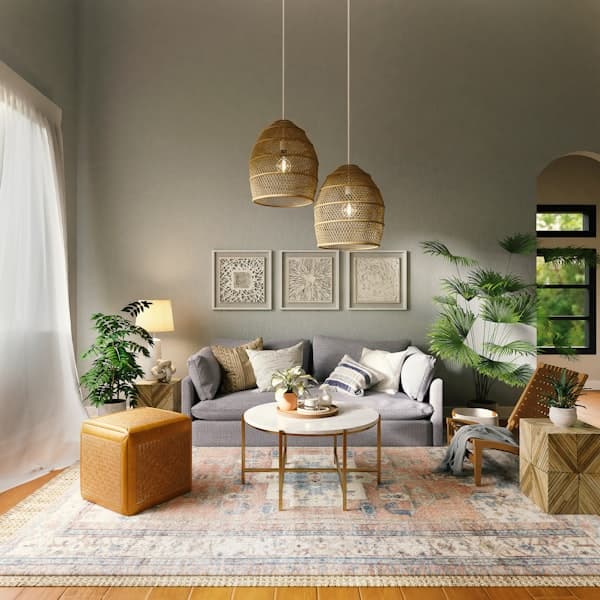
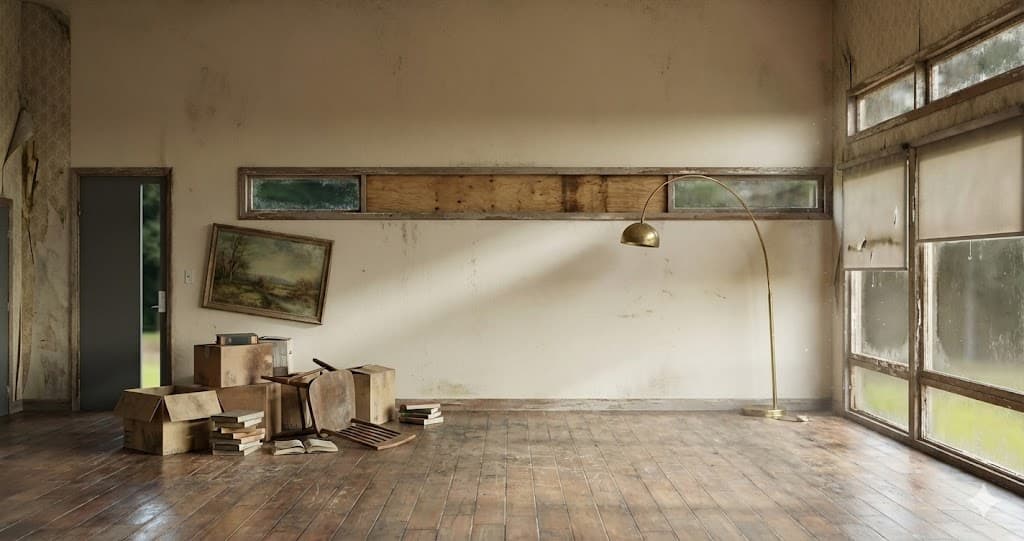
2026 Interior Design Styles: Try Every Trending Aesthetic with AI
The interior design landscape is transforming dramatically in 2026. Homeowners and renters have more aesthetic choices than ever—from maximalist maximalism to quiet luxury, from sustainable minimalism to dopamine décor. The challenge isn't finding inspiration. It's choosing which style actually works for your space and personality.
Here's what's changed: In previous years, choosing a design style meant committing—hiring a designer, buying furniture, painting walls. Today, AI interior design tools let you visualize every trending style in your actual room before spending a dollar.
This comprehensive guide covers the 15 most trending interior design styles for 2026, explains what defines each aesthetic, and shows how AI room design technology helps you find your ideal style confidently.
What Defines Interior Design Styles in 2026
Interior design styles in 2026 are personal aesthetic expressions that reflect how you want to live, combining color, furniture, texture, and philosophy into a cohesive home environment. Unlike previous decades defined by a single dominant aesthetic, 2026 celebrates plurality.
Key shifts in 2026:
- Maximalism over minimalism: Bold colors, layered patterns, and expressive design are mainstream
- Sustainability focus: Design choices now prioritize durability, secondhand furniture, and eco-friendly materials
- Cultural fusion: Styles blend globally—incorporating elements from multiple traditions simultaneously
- Tech integration: Smart homes and AI design tools are reshaping how people plan spaces
- Wellness emphasis: Design now prioritizes mental health, natural light, and biophilic elements
- Individuality: Instagram-perfect aesthetics give way to authentically personal spaces
Why AI is Reshaping How People Explore Home Aesthetics
Historically, discovering your design style required time, money, and risk:
- Browse countless Pinterest boards (hours of scrolling)
- Hire an expensive interior designer ($3,000–$15,000)
- Buy furniture and hope it works ($5,000–$50,000 investment)
- Live with design regrets if it doesn't match your vision
AI has fundamentally changed this equation. When you use an AI interior design tool like Decory AI, the process becomes:
- Upload a photo of your room (2 minutes)
- Select your preferred style (10 seconds)
- Receive 5–10 instant design variations (30 seconds)
- See exactly how each aesthetic looks in your actual space
- Make confident decisions before spending money
This represents a paradigm shift: From blind commitment to informed visualization. From expensive trial-and-error to confident decision-making.
The 15 Most Trending Interior Design Styles for 2026
1. Quiet Luxury
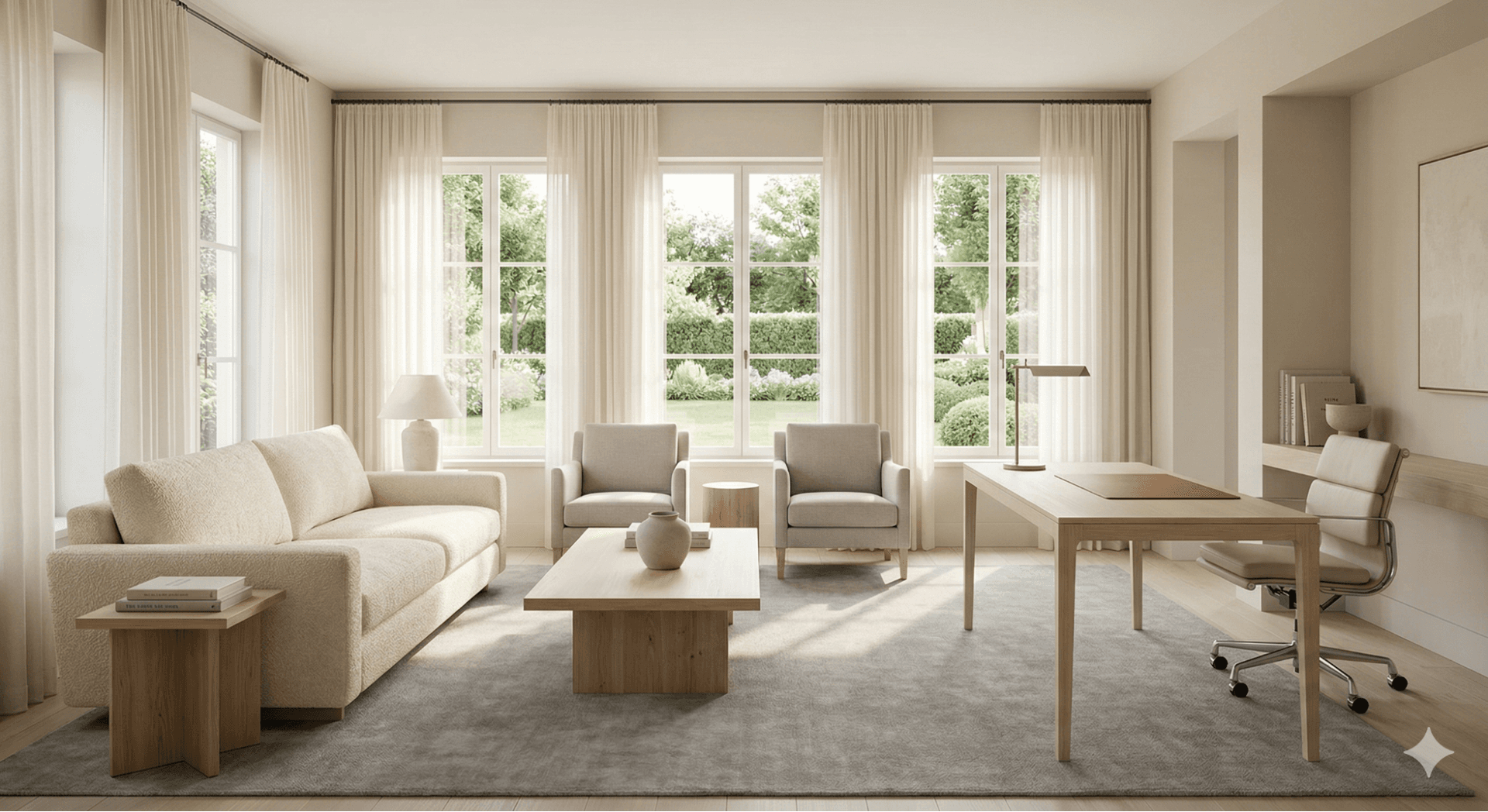
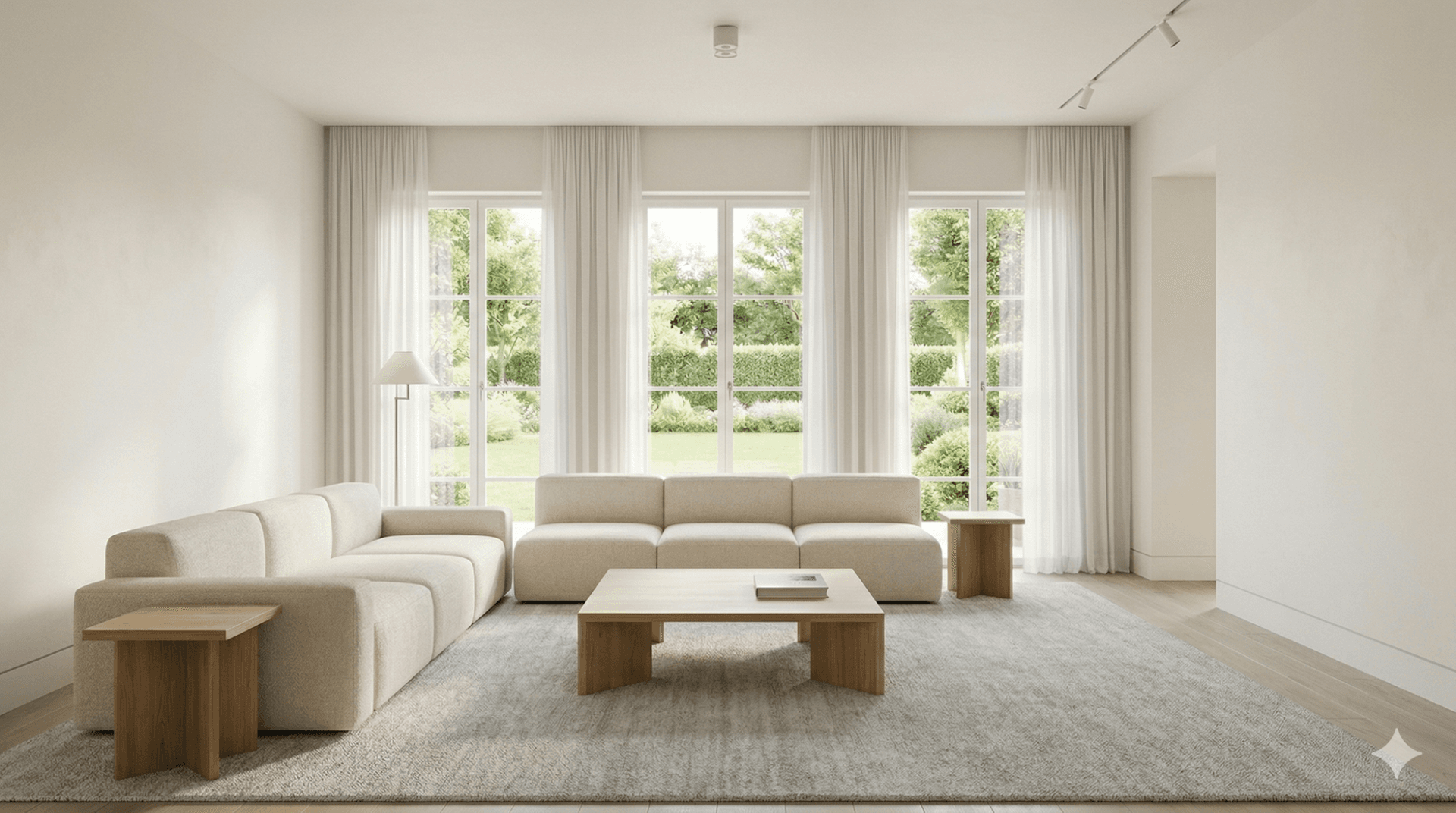
Quiet luxury is an understated, refined aesthetic that prioritizes quality over quantity, featuring neutral tones, minimal ornamentation, and investment-quality pieces that whisper rather than shout sophistication.
Key Characteristics:
- Neutral color palettes (cream, ivory, warm beige, soft gray)
- High-quality, simple furniture with clean lines
- Negative space—intentional emptiness
- Timeless pieces that age beautifully
- Minimal decoration; every item serves a purpose
Color Palette: Creams, warm whites, soft grays, pale wood tones. Best Suited For: Living rooms, bedrooms, home offices. How AI Helps: Upload your room to an AI room decorator and instantly visualize quiet luxury styling. See how neutral furniture, strategic lighting, and negative space create sophisticated calm.
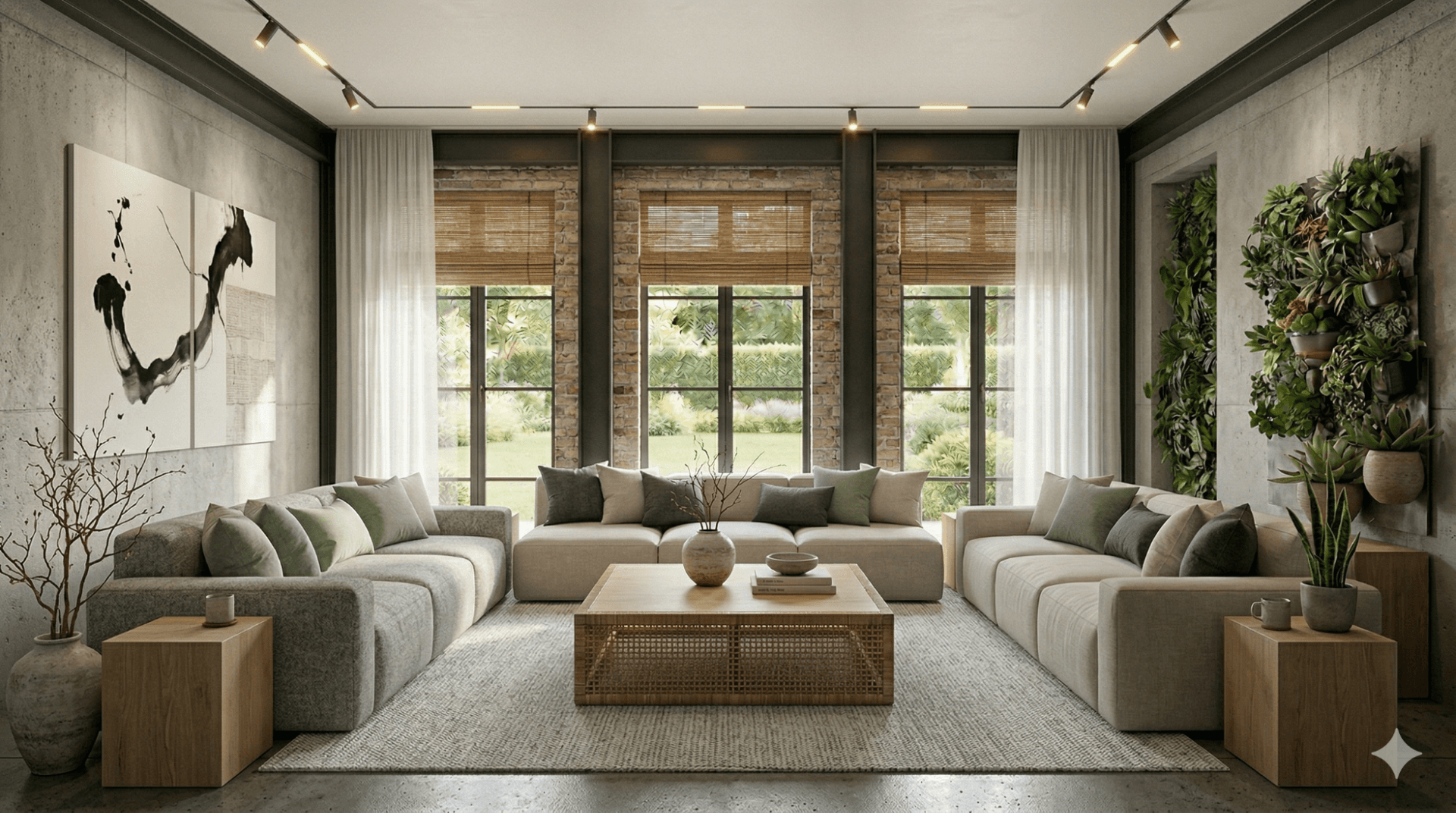
2. Dopamine Décor
Dopamine décor intentionally uses bold, cheerful colors, playful patterns, and joyful design elements to create spaces that elevate mood and celebrate individuality.
- Vibrant, saturated colors (hot pink, lime green, electric blue)
- Mixed bold patterns and textures
- Playful artwork and unconventional pieces
- Personality-driven design choices
- Furniture in unexpected colors
Color Palette: Vibrant jewel tones, sunset colors, neon accents. How AI Helps: An AI design tool excels at color harmony. Upload your room and request dopamine décor—the AI generates color combinations that work visually while boosting mood.
3. Maximalist
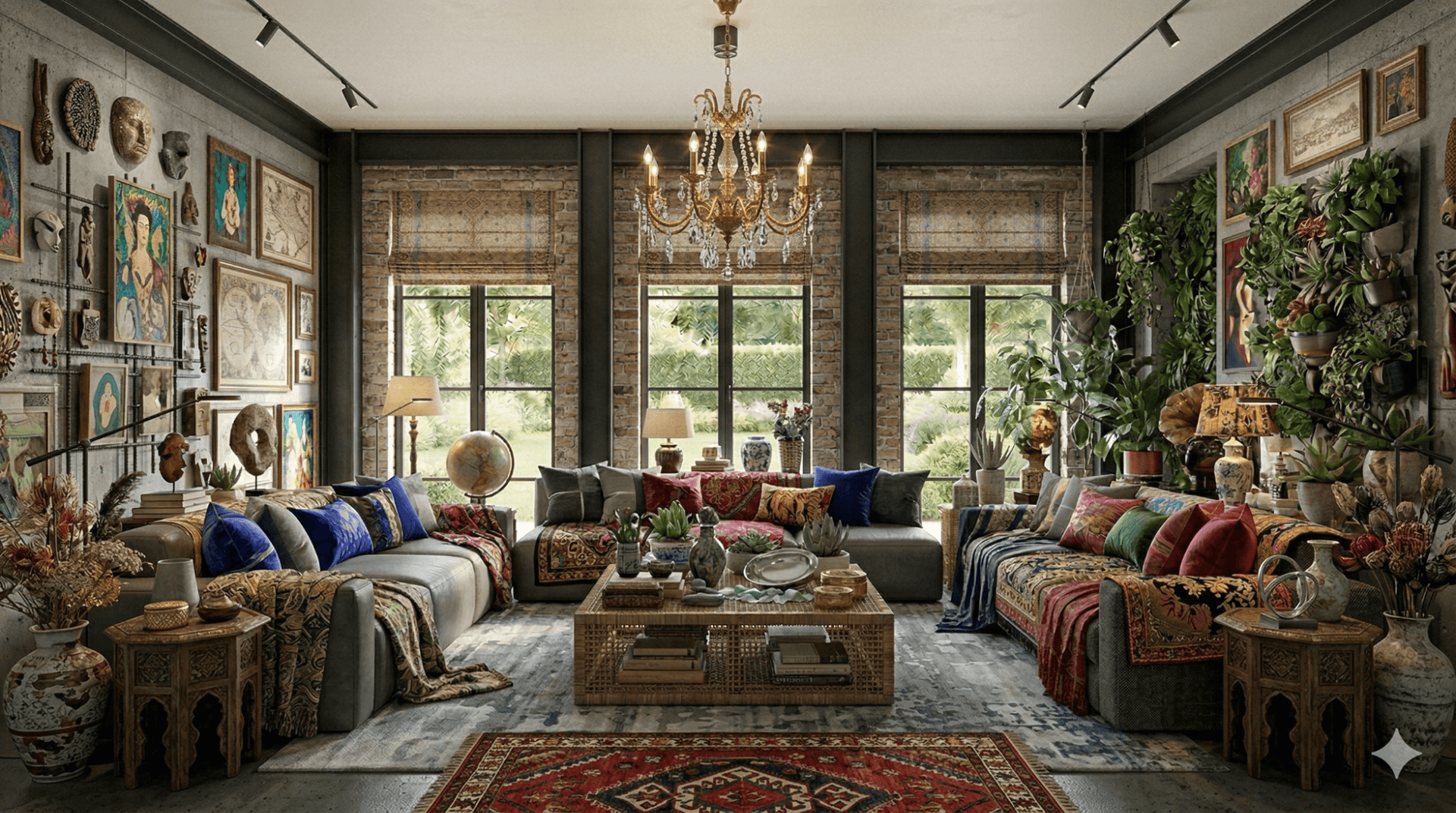
Maximalism celebrates abundance, layering, and collected beauty—featuring multiple colors, patterns, textures, and meaningful objects in intentional, curated abundance rather than chaos.
- Multiple colors and patterns layered harmoniously
- Collections displayed and celebrated
- Textured walls, mixed patterns, layered rugs
- Vintage and new pieces mixed together
- Gallery walls and creative display
- Every piece meaningful or beautiful
How AI Helps: Maximalism requires balance—too many patterns create chaos, too few dilute impact. AI room design analyzes your space and generates maximalist designs that layer successfully.
4. Minimalist Modern
Minimalist modern strips spaces to essential elements—clean lines, functional furniture, limited color palettes, and maximum negative space creating calm, uncluttered environments.
- Limited color palette (2–3 colors maximum)
- Functional furniture only, nothing decorative
- Negative space celebrated
- Clean lines and geometric shapes
- Hidden storage
- No visible clutter
Color Palette: Whites, grays, blacks, one accent color. Best Suited For: Studios, small apartments, home offices. How AI Helps: Minimalism is unforgiving—every piece must count. AI interior design helps you visualize perfect minimalism for your space.
5. Coastal Aesthetic
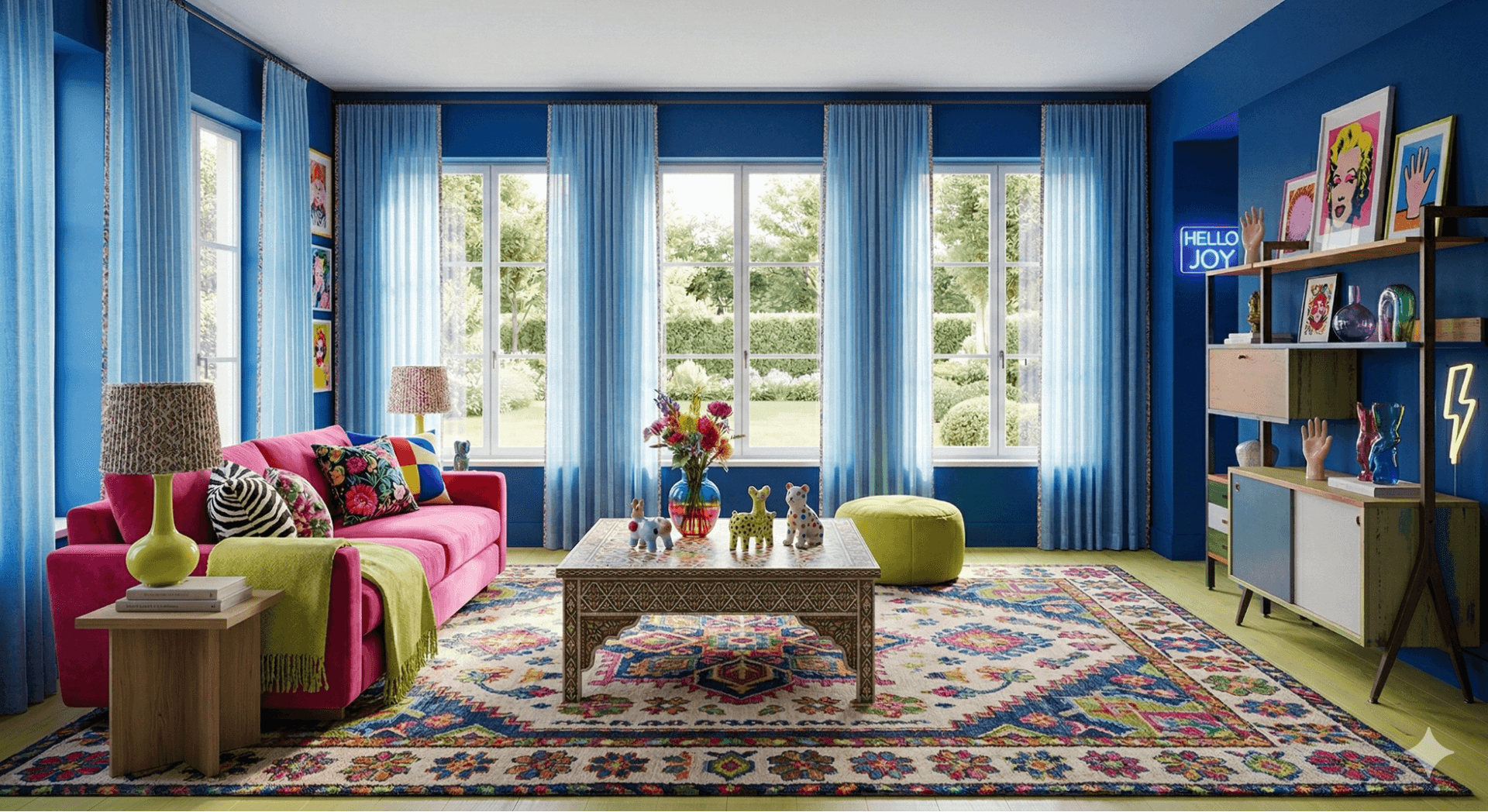
Coastal style brings beach house vibes indoors—featuring light colors, natural textures, breezy atmosphere, and subtle nods to ocean living creating calm, airy spaces.
- Light, airy color palette (whites, soft blues, sandy tones)
- Natural materials (wood, rattan, jute, linen)
- Minimal window treatments (light curtains)
- Coastal décor (shells, driftwood, nautical accents—used sparingly)
- Comfortable, casual furniture
- Emphasis on light and ventilation
Color Palette: Whites, soft blues, sandy beiges, driftwood gray. How AI Helps: AI can help you see how light materials, color choices, and furnishings create calm coastal style in your actual room.
6. Bohemian (Boho)
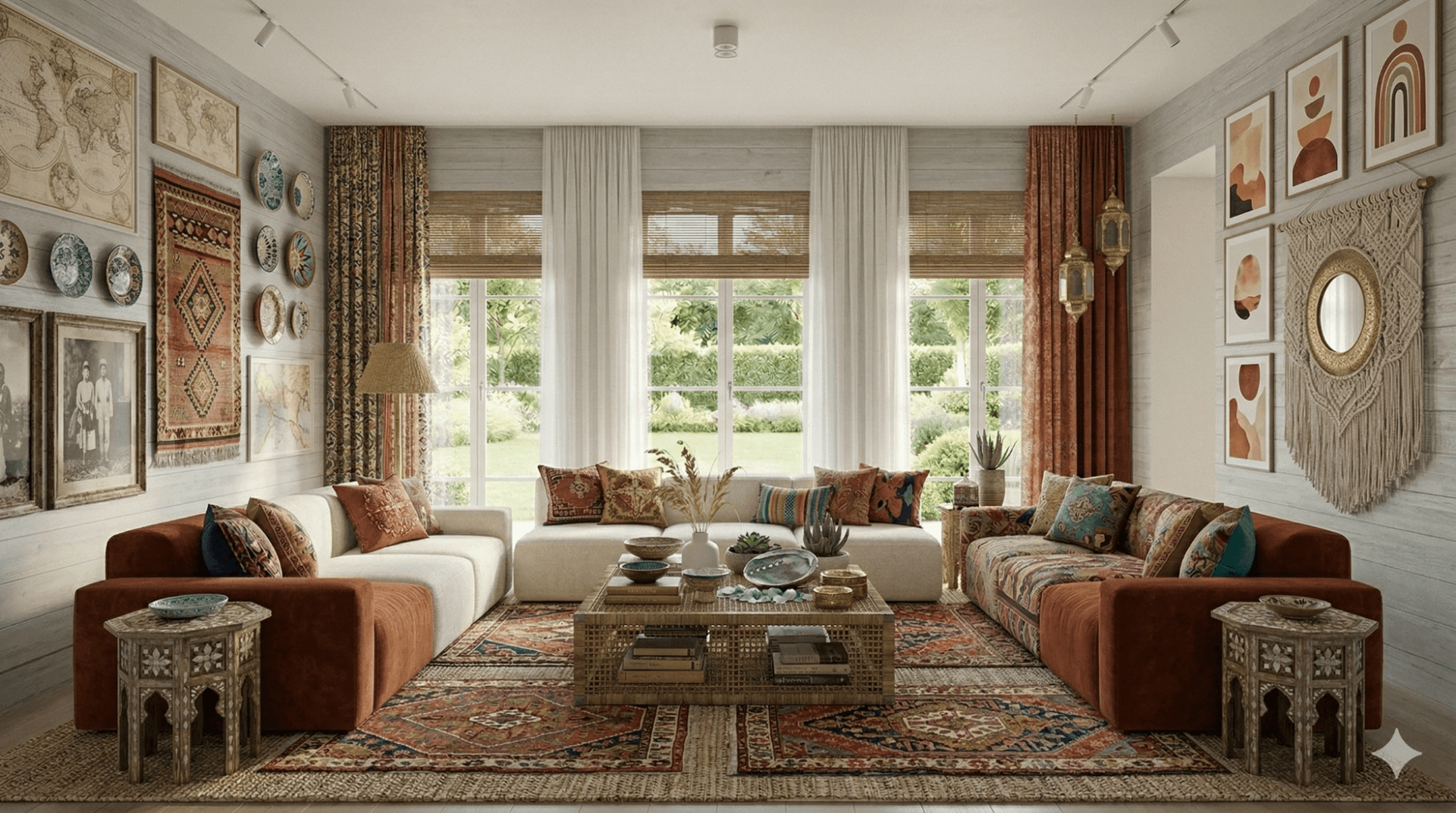
Bohemian celebrates global influences, artistic expression, layered textures, and colorful eclecticism creating spaces that feel traveled, collected, and deeply personal.
- Mixed patterns and global influences
- Warm, earthy color palette with bold accents
- Textured surfaces (macramé, woven pieces, plants)
- Collected vintage and artisan pieces
- Gallery walls and creative displays
- Plants and natural elements integrated
Color Palette: Warm terracotta, rust, ochre, sage green, gold accents. How AI Helps: Boho requires pattern balance—too chaotic feels overwhelming. Decory AI helps you test boho styling with proper proportions.
7. Industrial Modern
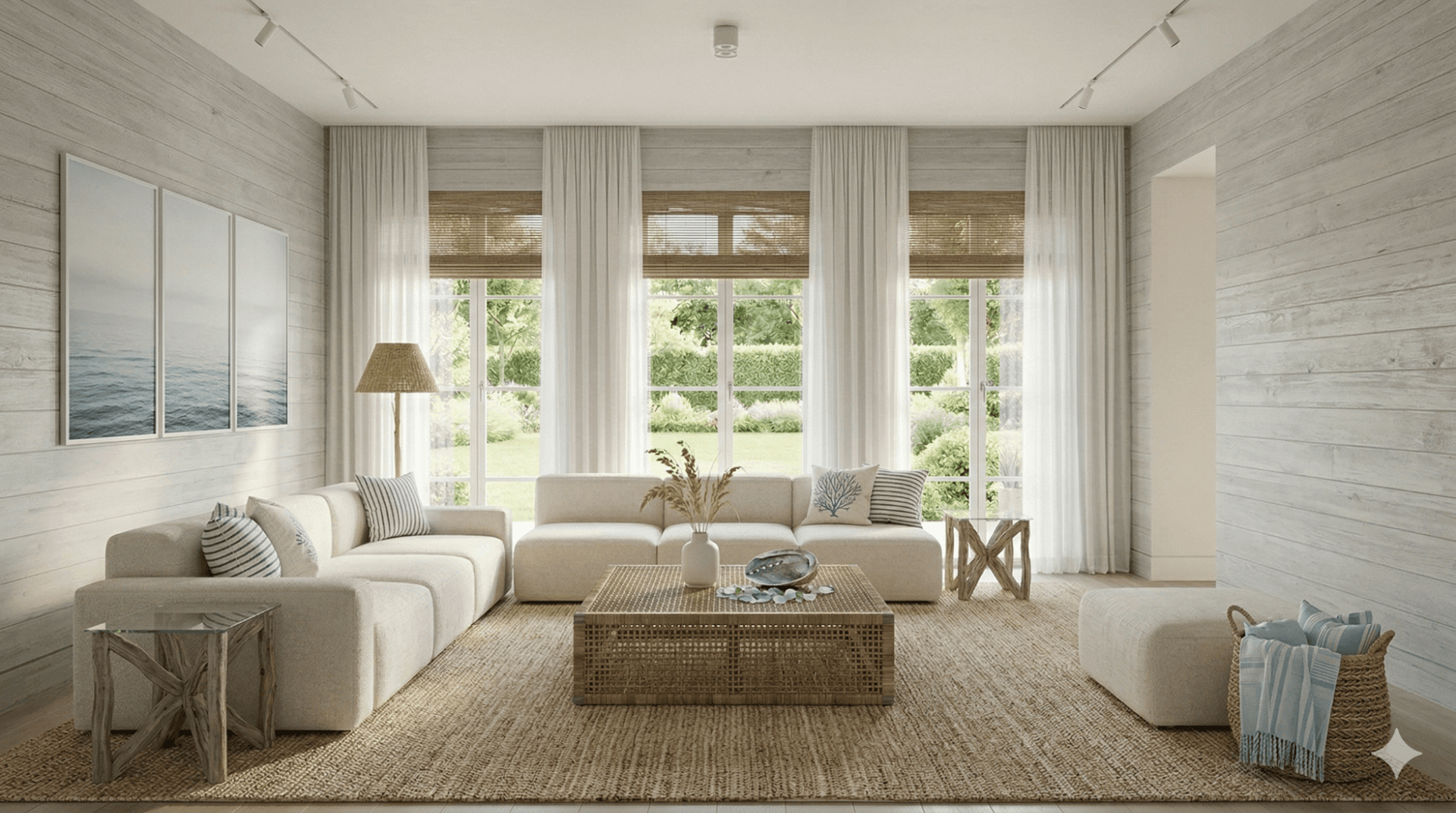
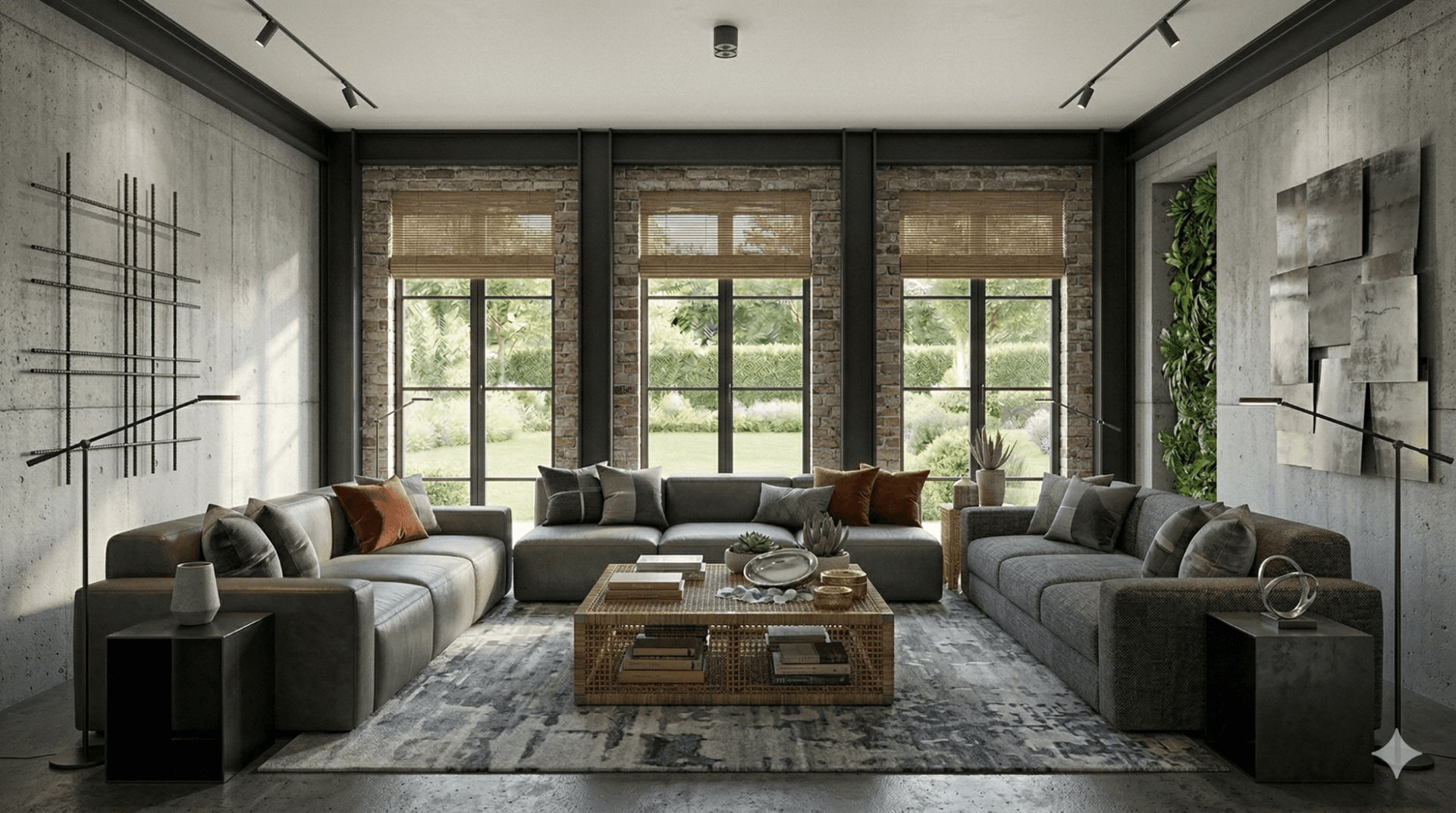
Industrial combines raw, unfinished architectural elements with contemporary design—exposed brick, metal fixtures, concrete, and polished modern pieces creating edgy, sophisticated spaces.
- Exposed brick, concrete, raw wood
- Metal fixtures and accents (steel, iron)
- Minimal window treatments
- Mixed polished and rough textures
- Functional, sculptural furniture
- Neutral color palette with metallic accents
Color Palette: Grays, blacks, browns, brick red, metallic accents. Best Suited For: Lofts, living rooms, home offices, studios.
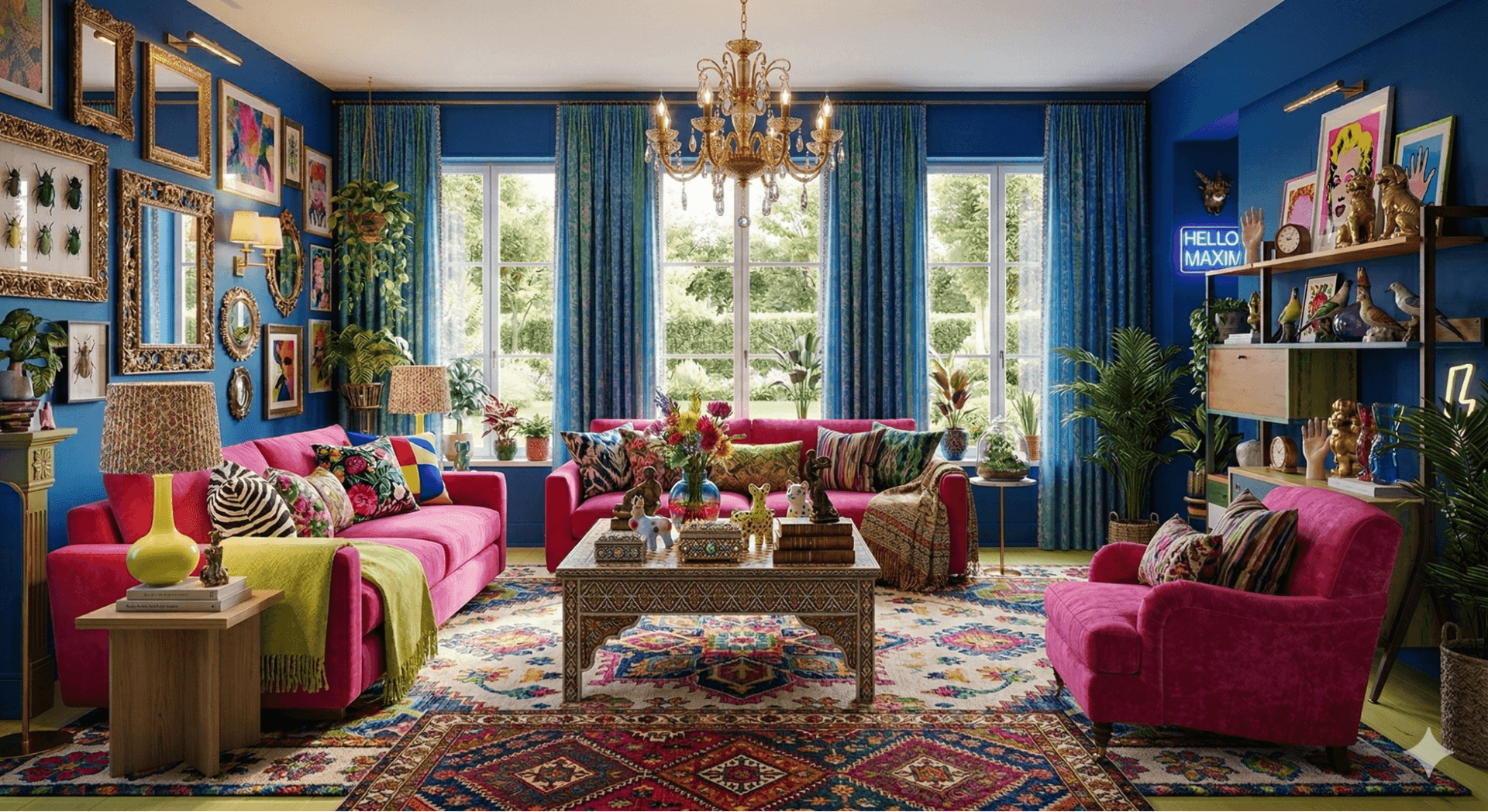
8. Maximalist Eclectic
Maximalist eclectic celebrates cultural diversity, bold self-expression, and uninhibited color mixing—purposefully breaking traditional design rules while maintaining intentional, curated beauty.
- Multiple bold colors with confidence
- Global influences (Moroccan, Indian, African, Asian)
- Layered patterns—geometric, floral, global
- Meaningful collected pieces displayed prominently
- Mix of vintage and contemporary
- Walls in bold colors or wallpaper
9. Japandi
Japandi blends Japanese minimalism with Scandinavian warmth—combining clean lines and simplicity with coziness, natural materials, and subtle comfort creating balanced, peaceful spaces.
- Minimal, clean lines with warm materials
- Natural colors (whites, warm grays, natural wood)
- Quality materials—wood, linen, leather
- Zen-like calm with comfort
- Functional beauty—nothing purely decorative
- Low-profile furniture and natural light
Color Palette: Whites, warm grays, natural wood tones, soft blacks. How AI Helps: Japandi requires precise balance. AI home design tools help you visualize where to add warmth to minimalism.
10. Contemporary Glam
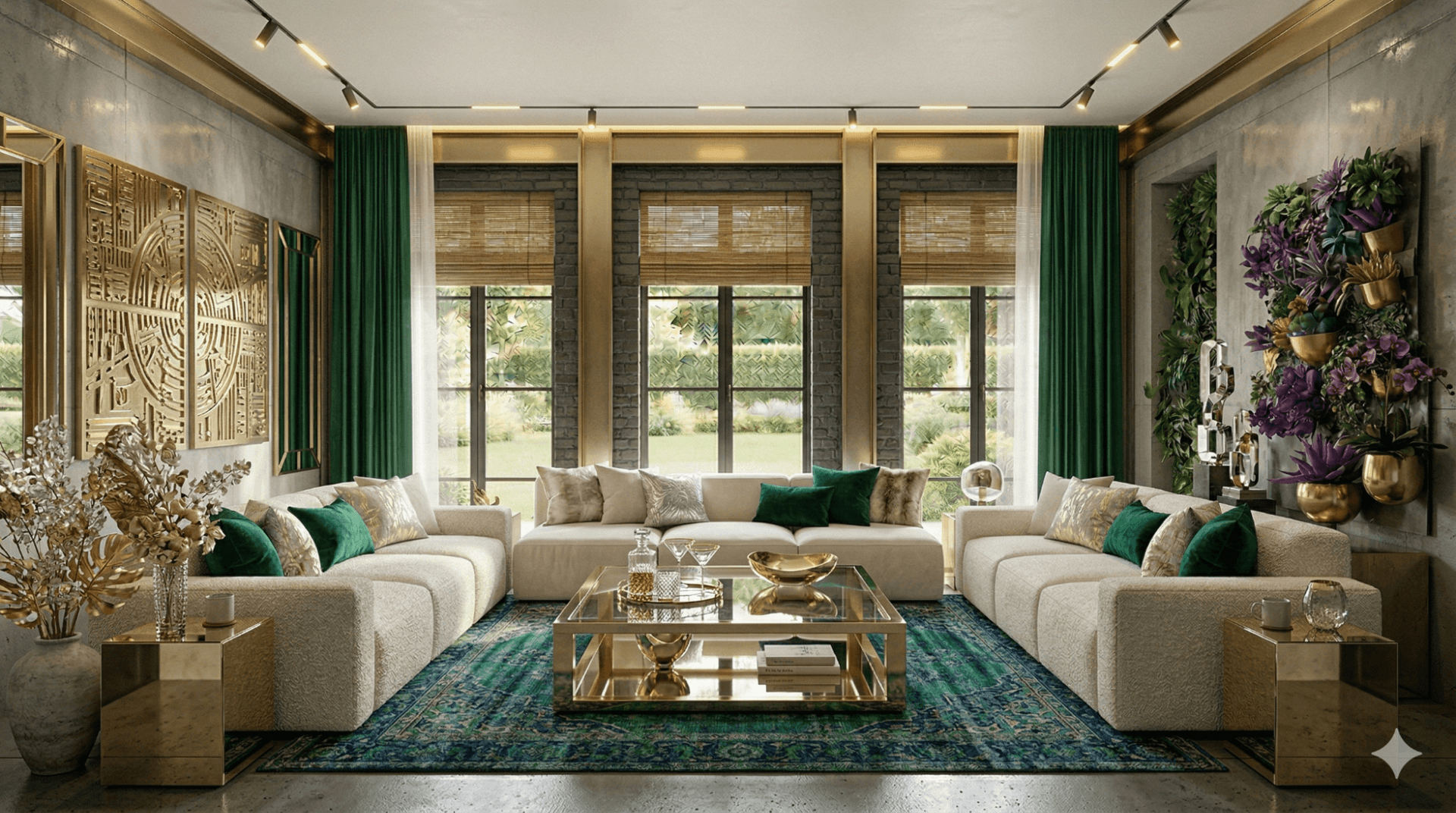
Contemporary glam merges modern clean lines with luxe details—mixing minimalist spaces with metallic accents, jewel tones, and sophisticated drama creating polished, elevated environments.
- Clean, minimal furniture in sleek styles
- Jewel tone accents (emerald, sapphire, amethyst)
- Metallic finishes (gold, brass, chrome)
- Statement lighting—chandeliers, sculptural lamps
- Plush textures (velvet, silk, marble)
- Balanced minimalism + luxury
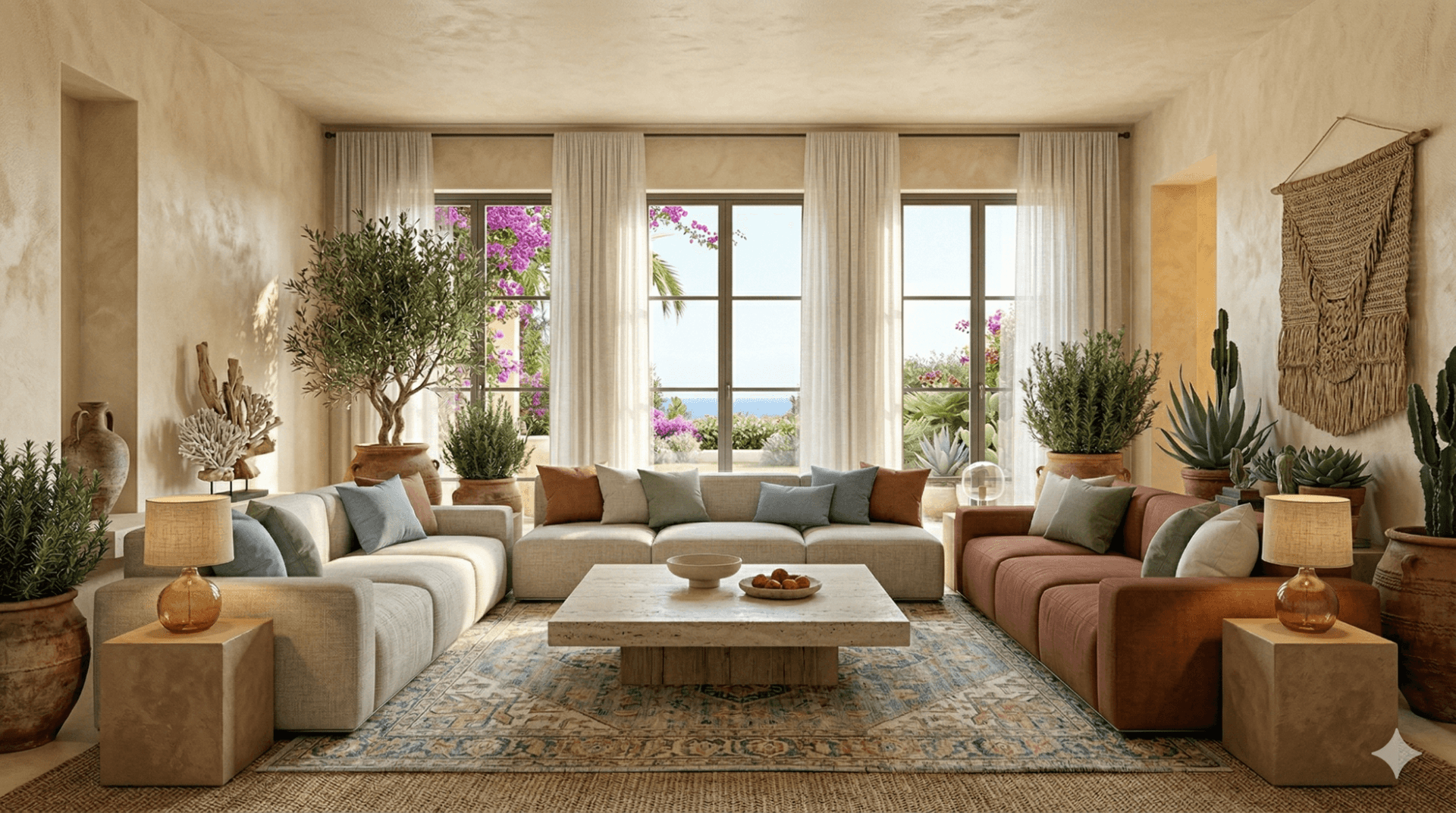
11. Sustainable Minimalism
Sustainable minimalism combines minimal aesthetic with environmental responsibility—prioritizing secondhand pieces, durable materials, and intentional consumption creating beautiful, ethical spaces.
- Minimal aesthetic from ethical choices
- Secondhand and vintage furniture (intentional)
- Sustainable, non-toxic materials
- Long-lasting quality pieces
- Transparent sourcing values
- Limited consumption—only what's needed
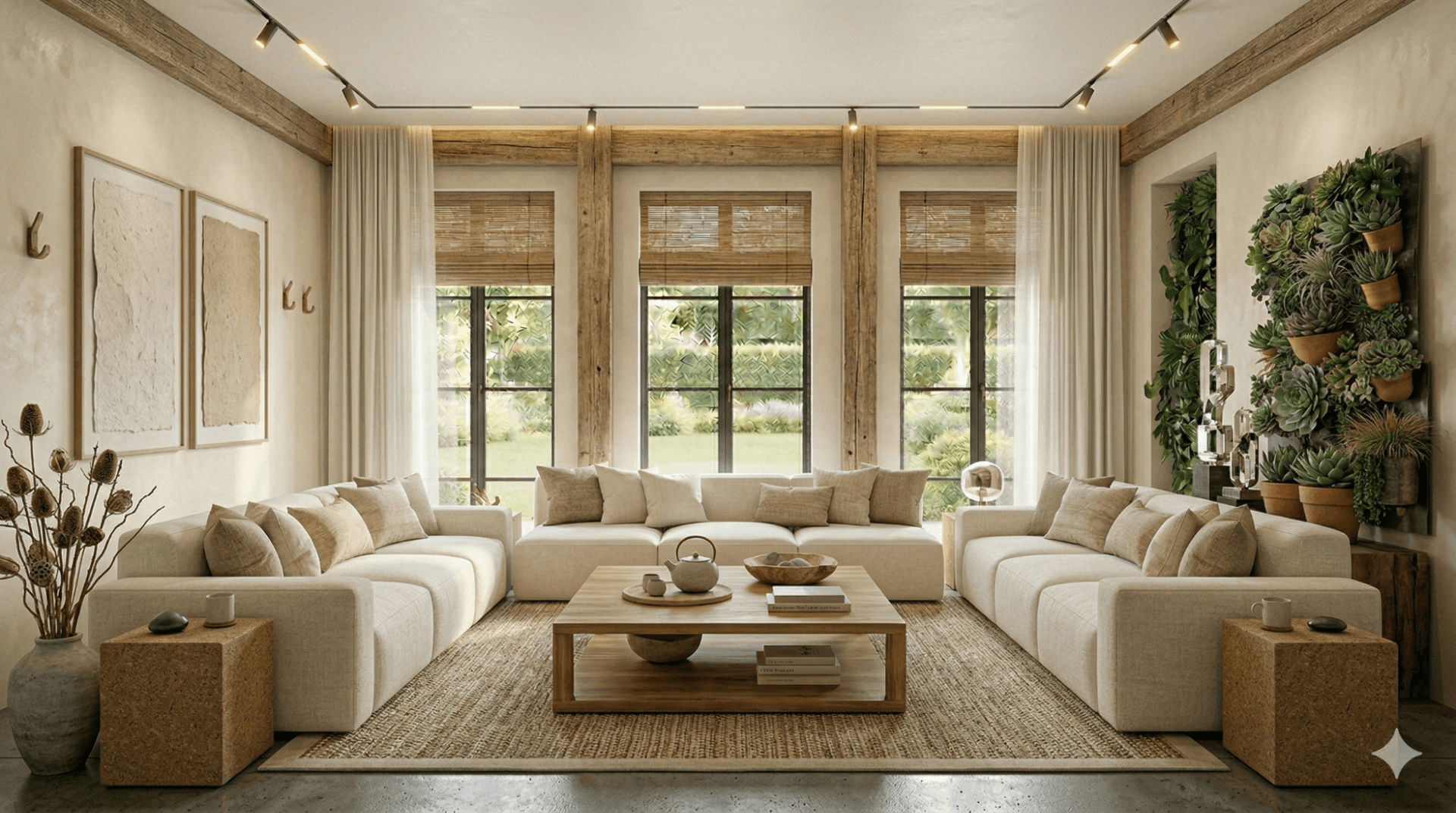
12. Maximalist Sustainable
Maximalist sustainable celebrates abundance through ethical means—combining expressive, layered design with secondhand treasures and sustainable materials creating personality-driven, eco-conscious spaces.
- Abundant, layered aesthetic from thrifted pieces
- Vintage and secondhand treasures displayed
- Sustainable materials and ethical craftsmanship
- Cultural and artisan-made pieces celebrated
- Colors and patterns from natural, sustainable sources
- Meaningful, zero-waste abundance
13. Brutalist Modern
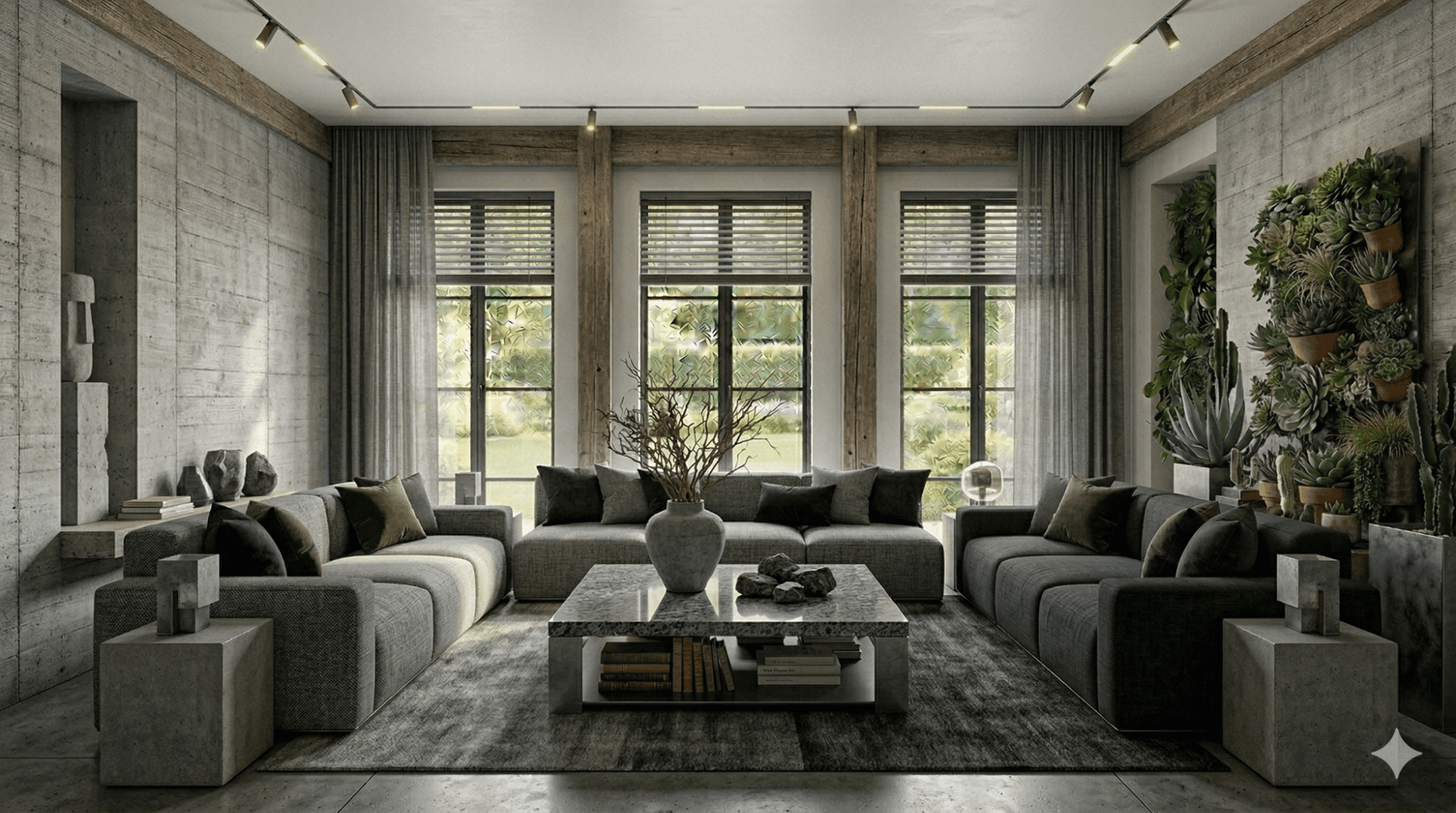
Brutalist modern showcases raw, sculptural architecture and bold geometric forms—celebrating heavy materials, stark lines, and imposing presence creating dramatic, artistic spaces.
- Raw concrete, stone, heavy wood
- Geometric, sculptural furniture
- Bold, imposing forms
- Minimal ornamentation
- Neutral color palette
- Art-forward design philosophy
- Dramatic lighting
Color Palette: Grays, blacks, browns, raw material colors. Best Suited For: Living rooms, art studios, modern lofts.
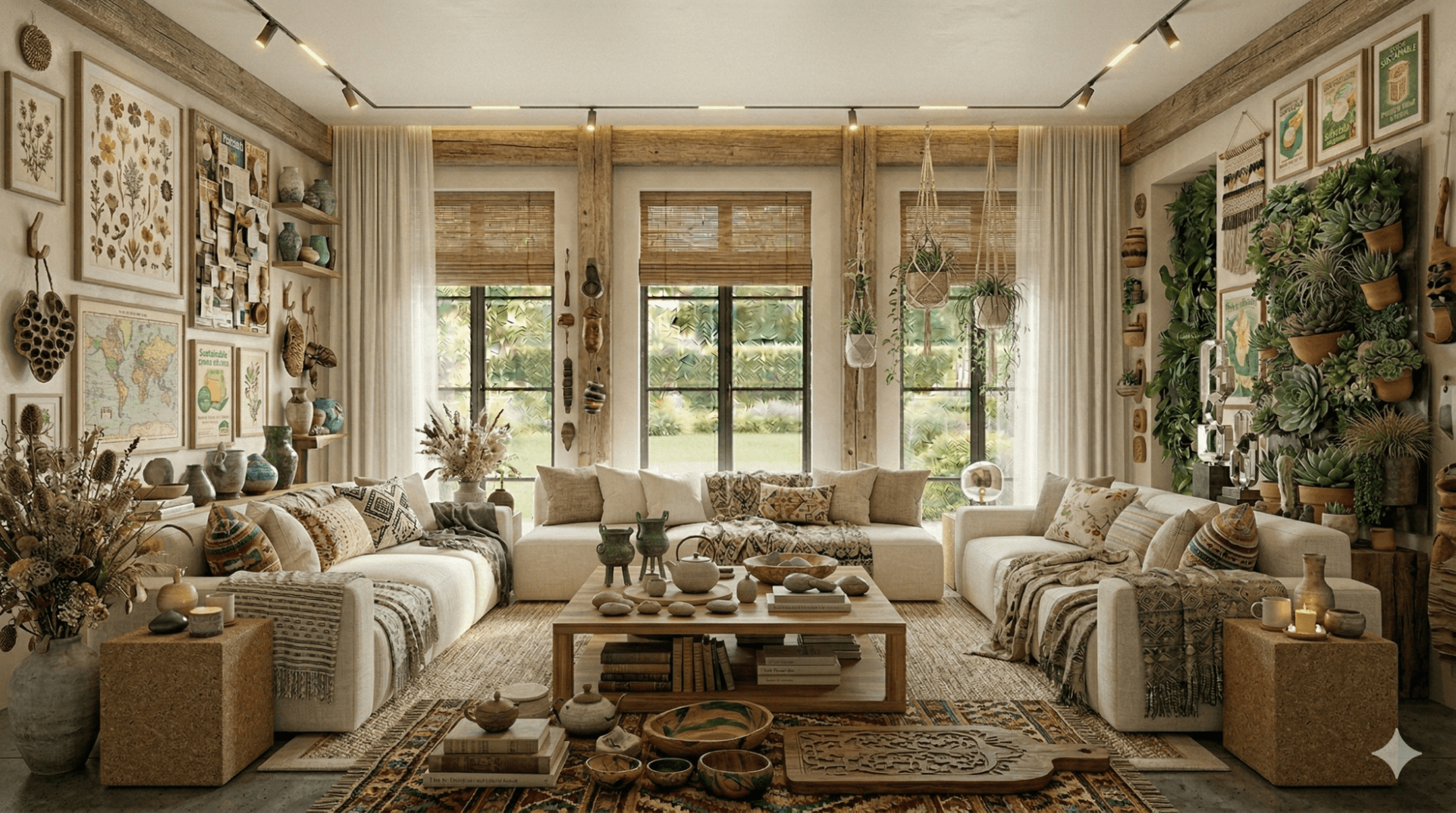
14. Mediterranean Coastal
Mediterranean coastal brings European seaside vibes indoors—warm terracotta, aged wood, terracotta pottery, and sun-drenched warmth creating spaces that feel like Italian villas or Greek islands.
- Warm, earthy color palette (terracotta, ochre, cream)
- Aged wood, rustic finishes
- Terracotta pottery and ceramics
- Arched doorways, exposed beams (architectural nods)
- Layered, warm textiles
- Sun-drenched, bright spaces
- Garden-inspired elements
15. Y2K Nostalgia
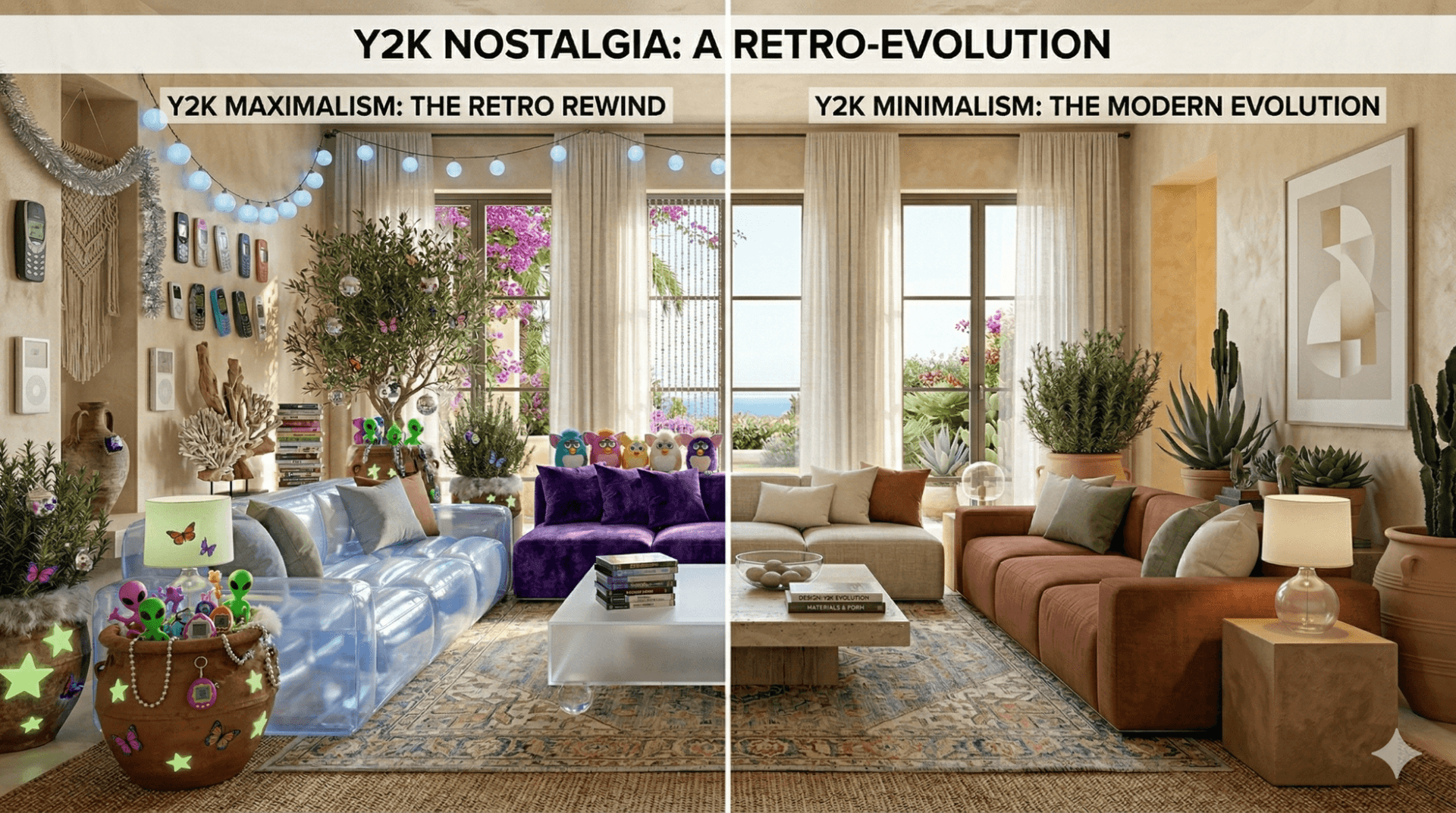
Y2K nostalgia revives early 2000s aesthetics—neon accents, low-rise furniture silhouettes, bold colors, and playful retro elements creating spaces that celebrate 2000s pop culture with contemporary polish.
- Neon or bright accent colors
- Low-profile furniture (low sofas, floor seating)
- Playful, colorful details
- Retro technology (visible in design)
- Mixed textures (plastic, fur, shiny materials)
- Bold, unapologetic colors
- Pop culture and nostalgia nods
Color Palette: Hot pink, lime green, baby blue, neon accents on neutrals. Best Suited For: Bedrooms, creative spaces, entertainment rooms.
How AI Interior Design Tools Help You Try Every 2026 Style Instantly
The Technology Behind AI Interior Design
AI interior design works by analyzing millions of design images, learning patterns about what makes styles work, then applying those patterns to your specific room. When you upload a photo, the technology:
- Analyzes your space: Dimensions, existing furniture, wall color, lighting conditions
- Understands your chosen style: Color palettes, furniture types, characteristic elements
- Generates designs: Creates multiple interpretations showing your room redesigned
- Provides variations: Different color options, furniture arrangements, styling approaches
Why This Matters for 2026 Style Selection
You no longer have to guess. Instead of wondering "Will boho look good in my apartment?" or "Can I pull off maximalist eclectic?"—you can see the answer instantly. This eliminates the primary design anxiety: financial risk. Buying a $2,000 sofa, painting walls, or committing to décor only to discover you don't like it is expensive. AI visualization removes this risk entirely.
The Decory AI Advantage
Decory AI stands out as the best AI interior design app because it:
- Understands 2026 trends specifically: Trained on warm minimalism, biophilic design, natural wood elements
- Generates multiple interpretations: See different approaches to your chosen style
- Works with your constraints: Renters, small spaces, budgets—it adapts
- Visualizes accurately: Photos render realistically in your actual lighting
- Provides actionable shopping lists: See exactly what furniture and décor to buy
Interior Design Styles 2026 by Region
United States Trends
Most Popular Styles: Dopamine décor, quiet luxury, maximalist eclectic. Americans increasingly reject cookie-cutter homes, preferring personalized expression. US consumers rapidly adopt AI interior design tools, with 34% now using them for design decisions (vs. 12% hiring traditional designers).
United Kingdom Trends
Most Popular Styles: Japandi, sustainable minimalism, contemporary glam. UK audiences favor balance—Japanese calm + Scandinavian warmth appeals to UK sensibilities. Sustainability consciousness drives sustainable minimalism adoption. AI design tools are used before hiring designers—visualization increases confidence in professional partnerships.
India Trends
Most Popular Styles: Maximalist eclectic, bohemian, sustainable maximalist. Indian design tradition celebrates color, pattern, and cultural fusion. Boho and maximalist eclectic resonate with Indian aesthetic values. Growing adoption among urban professionals in Delhi, Mumbai, Bangalore, and Hyderabad.
Australia Trends
Most Popular Styles: Coastal, Japandi, maximalist sustainable. Australian geography drives coastal preferences. Japandi's minimalism-meets-warmth suits diverse climates. Sustainable choices align with environmental values.
Brazil Trends
Most Popular Styles: Maximalist eclectic, bohemian, Y2K nostalgia. Brazilian culture celebrates color, pattern, and joy. Rising adoption of AI interior design tools among São Paulo, Rio, and Brasília urban professionals.
Traditional Interior Designers vs. AI Interior Design Tools
These aren't replacements—they're complementary. Traditional designers charge $3,000–$15,000+ and take weeks or months. AI interior design tools cost $0–$15/month and deliver results in seconds. Traditional designers offer 1–3 concepts; AI tools generate 5–10+ options. Use AI room design tools to explore styles, test ideas, and build confidence. Then hire a designer to refine and implement if budget allows.
People Also Ask About Interior Design Styles 2026
What are the top interior design trends for 2026? The top trends are dopamine décor (joy-driven color), quiet luxury (understated sophistication), maximalist eclectic (cultured abundance), and Japandi (Japanese-Scandinavian fusion).
Which interior style is timeless? Japandi and contemporary glam represent the most timeless trends, combining aesthetic appeal with lasting functionality.
Is minimalism still popular in 2026? Minimalism has evolved into specific niches: quiet luxury, sustainable minimalism, and minimalist-with-warmth (Japandi). Pure stark minimalism has given way to warmer, more livable interpretations.
How do I choose my home aesthetic? Start by defining what you want to feel in your home (calm, joyful, cultured, sustainable). Then use Decory AI to visualize how different styles translate to your actual space before committing.
Can I mix interior design styles? Absolutely. Modern design encourages mixing—boho + industrial, maximalist + glam, coastal + bohemian. The key is intentionality. Use AI tools to test combinations before implementing them.
How to Get Started with AI Interior Design Styles 2026
Step-by-Step Process
- Take a clear photo of your room (natural lighting, straight angle)
- Visit Decory AI (top-rated platform)
- Upload your photo and choose your desired 2026 style
- Review AI-generated designs (typically 5–10 variations)
- Compare styles side-by-side to see visual differences
- Create a shopping list from your favorite design
- Shop confidently knowing exactly how pieces work together
- Implement gradually as budget allows
The Future of Interior Design Styles
2026 is the year personalization wins. The age of following design trends ends; the age of curating authentic spaces begins. AI interior design accelerates this transformation. Because you can now test any style instantly, the only limit is your imagination.
This democratizes design. It removes financial barriers. It gives everyone access to professional-level design thinking. The result? Homes become more authentic, more joyful, more intentionally designed—less cookie-cutter Instagram aesthetic, more genuinely personal spaces that make people happy.
FAQ: Interior Design Styles 2026
Q: What if I like multiple interior design styles equally? A: This is common. You can blend styles (maximalist + Japandi, boho + contemporary glam) or choose different styles for different rooms. Use AI tools to test any combination.
Q: How often do interior design styles change? A: Major shifts happen every 3–5 years. 2026 trends will evolve by 2029. AI tools adapt to emerging trends faster than traditional design resources.
Q: How do I prevent my design choices from feeling outdated in a year? A: Choose foundational pieces (furniture, wall color) that are timeless. Use trends for décor, textiles, and accents. Update these affordably without replacing core furniture.
Q: Can renters use these interior design styles? A: Absolutely. All 15 styles can be achieved with furniture, textiles, removable wallpaper, and décor—zero permanent changes. Renters particularly benefit from AI visualization since they can't test paint colors easily.
Q: Can I use these styles on a budget? A: Yes. All 15 styles work at any budget. The difference is quality/quantity, not aesthetic. Use secondhand furniture, DIY elements, and strategic investment pieces to achieve any style affordably.
Your 2026 Design Journey Starts Here
Interior design in 2026 isn't about following one dominant trend. It's about discovering your personal aesthetic among 15+ possibilities, testing it risk-free, and creating a space that genuinely reflects who you are.
Upload your room to Decory AI today. Test dopamine décor's joy. Visualize quiet luxury's refinement. Experience how bohemian warmth or contemporary glam transforms your space. See which 2026 style resonates. In minutes, not months. In visualization, not expensive trial-and-error. With confidence, not guessing.
Ready to Transform Your Space?
Use Decory's AI-powered design tools to visualize your transformation. Upload a photo and explore endless possibilities in seconds.
Try Decory AI Now