Small Bedroom Minimalist Design With Decory AI
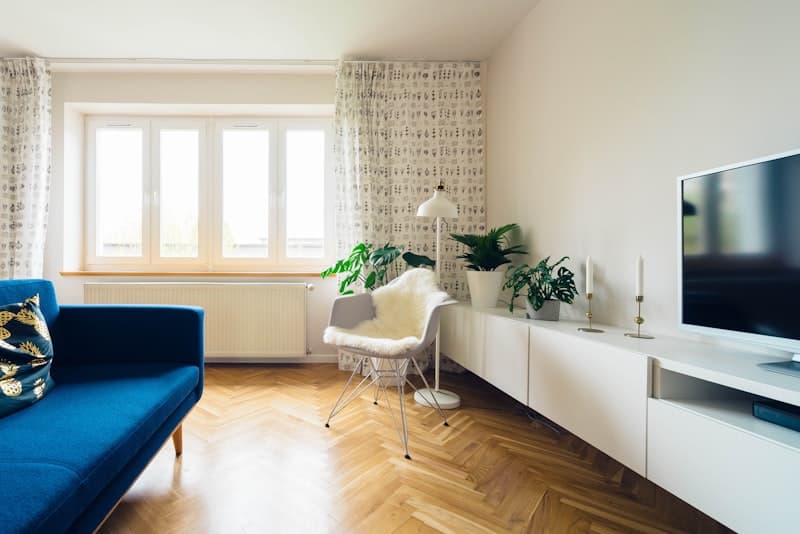
Shaping a modern minimalist bedroom begins with the measured placement of objects and surfaces. Each element interacts with fixed boundaries, such as walls and windows, as well as paths for movement. While some believe that minimalist interior design stems from removing, its success actually depends more on cohesion and the way light, material, and volume hold together. Decory AI room design planners excel at this precision.
How an AI Room Planner Approaches Small Bedroom Minimalist Design
Before selecting furniture or materials, an AI room decorator interprets room geometry. It accounts for door swings, window locations, ceiling heights, and outlet placements. The algorithm also identifies traffic patterns and natural light sources, mapping how people move through the space and where illumination falls throughout the day.
This matters most in a small bedroom interior design. Bed position, for example, goes beyond your preference; it determines what storage options remain. Similarly, a desk against a wall affects whether you can add a wardrobe or must rely on under-bed storage. The AI calculates these relationships before suggesting any furniture.
Furniture Anchoring in AI Room Design
Once the base grid is active, Decory.AI brings in furniture logic. The AI room planner reads the largest mass first—typically the bed—and assigns it to the most suitable field. The bed receives placement based on window position, door clearance, and the remaining floor area available for other functions.
Like professional interior designers, the system sets large-scale furniture first. A wardrobe enters where the wall height supports the vertical span and the floor area confirms door reach. A desk below a window takes advantage of natural light while preserving circulation space. Each piece anchors to the room's fixed elements before smaller items fill the gaps.
Zone Allocation in a Minimalist Bedroom Interior
While placing the elements, the AI room planner also divides the space into zones. These sections gain tasks: storing, dressing, resting, working. It assigns them based on dimensions and what's nearby so that related activities cluster efficiently.
For a minimalist bedroom, this is essential. Since there is no excess, each surface must support a clear use. A nightstand doesn't just hold a lamp—it becomes part of the resting zone, positioned to support bedtime routines. Storage zones align with dressing areas, and work surfaces integrate with natural light sources.
How the AI Decor Generator Selects Materials for Compression and Flow
Material suggestions don't begin until all objects are in place and reach distances are known. At that point, the system starts assigning surface logic—what needs to stay open, what catches light, what requires durability versus what can be softer.
The software uses the information calculated to this point to define where each material goes. Floor zones usually receive light-toned wood or composite. Seated zones, on the other hand, need soft surfaces—upholstery or textiles that invite rest. Work surfaces get hard, smooth finishes that support tasks. The AI matches materials to function while maintaining visual cohesion.
AI Room Design Assigns Lighting Based on Use
Lighting is applied after furniture and materials are placed. The system already knows the function of each surface and the direction each object faces. Hence, the overhead lighting covers areas marked for tasks, while ambient lighting fills zones meant for relaxation.
The fixtures are placed according to ceiling height, coverage radius, and distance between main access points. Wall-mounted lighting goes wherever seated or lying tasks happen—usually beside the bed or above a reading chair. The AI ensures light falls where it's needed without creating glare or shadows that disrupt the minimalist aesthetic.
Final Composition Through AI Decor Generator
Once light direction and spacing are set, the system adds rugs, curtains, fabric spans, and decorative elements, according to what those light lines cross. It reviews object spacing as density and how textures interact across the room's surfaces.
At this point, AI room design measures distances between vertical and horizontal elements, tracking edge alignment, offset, and depth across the room. If a cabinet ends near a window, it checks whether the transition feels intentional or accidental. The system refines until every element relates to the whole through clear geometric relationships.
Why AI Room Design Works for Minimalism
Minimalist interiors depend on precision, and AI room design handles this by resolving structure before style. Decory.AI builds each room from fixed geometry, measured access, and function-specific zones. It doesn't add decoration until the foundation supports it, ensuring that every element serves both aesthetic and practical purposes.
Try your own layout with Decory.AI and see how a stripped-down design works when everything fits by logic.
Ready to Get Started?
Transform your space today with Decory.ai. Upload a photo and see your room redesigned in seconds with AI-powered technology.
Try Decory AI Now