How to Use AI to Decorate a Small Apartment on a Budget
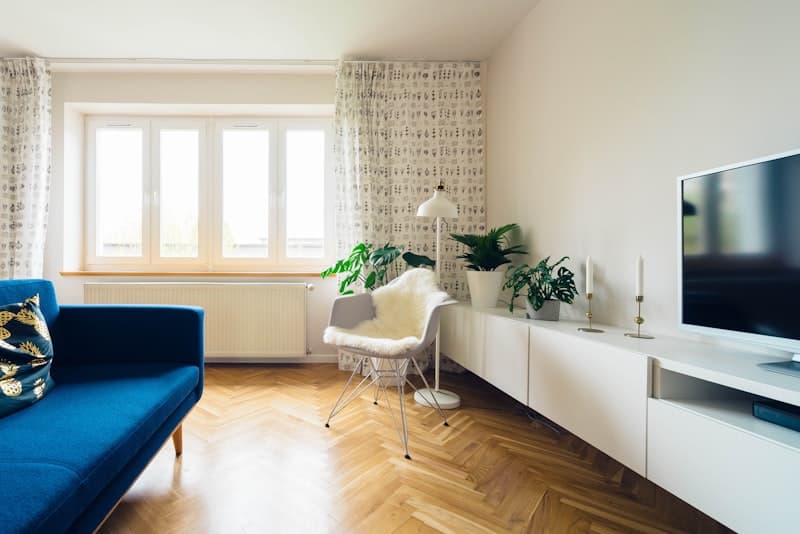
Quick Answer: AI interior design for small apartments works by analysing a photo of your space to understand its dimensions, light, and layout — then generating photorealistic redesigns that maximise every square foot. Free AI tools let renters in studios, 1BHK flats, and compact apartments test furniture arrangements, colour schemes, and storage strategies before spending a single penny.
Decorating a small apartment is harder than decorating a large one. More furniture doesn't fit, bad choices are visually loud, and in a rental you often can't paint, drill, or make structural changes. Every decision carries more consequence in a compact space — and that's exactly where AI earns its place.
Instead of guessing whether a particular sofa will dominate your living area, or whether a lighter wall colour will actually make the room feel bigger, AI lets you see the answer in seconds.
What Is AI Interior Design for Small Apartments?
AI interior design for small apartments is a photo-based visualisation system that reads your room's spatial structure and generates redesigned versions optimised for compact living. The AI identifies wall proportions, window placement, ceiling height, and existing furniture to produce outputs that respect your physical constraints — not just generic small-space inspiration. The key difference from browsing Pinterest: every generated design reflects your actual apartment, not an aspirational space of a different size.
Who This Works For
This approach is built for:
- London studio flat renters living in 250–350 sq ft with no permission to paint
- NYC studio apartment tenants in sub-400 sq ft spaces with strict no-modification lease terms
- Young professionals in Mumbai making the most of a 350–500 sq ft 1BHK
- Shared accommodation renters who only control their bedroom and need to make one room do everything
- Anyone decorating for the first time who doesn't want to waste money on furniture that arrives and doesn't work
Step 1: Capture Your Apartment Layout — Photos and Measurements
Start with solid input data. Everything downstream depends on this.
Photography:
- Photograph each room from the corner or doorway to get maximum coverage
- Shoot in daylight, camera level, no wide-angle lens
- Remove obvious clutter but don't rearrange furniture — the AI needs to see your actual starting point
Measurements to note:
- Room length and width
- Ceiling height — a 7.5ft ceiling in a London flat handles furniture proportions very differently to a 9ft US apartment ceiling
- Window and door positions, including which way doors swing
- Any fixed built-ins: wardrobes, storage units, kitchen counters
Step 2: Choose a Small Apartment AI Design Tool
Free-tier AI tools are entirely sufficient for small apartment decorating decisions.
What to look for:
- Real photo upload (not floor plan only)
- Photorealistic output — if the render looks like a cartoon, the design decisions won't translate to real life
- Style variety covering compact-appropriate aesthetics: Japandi, Scandinavian minimal, Indian contemporary, modern minimal
- Mobile-first — you'll want to check designs while standing in the actual room
Decory is free to download on iOS and Android, and a Premium subscription is required to generate designs — upload your room photo, pick a style, and get a photorealistic redesign in under 30 seconds.
Step 3: Define Your Budget Constraints Before You Design
Set a realistic budget ceiling before generating designs — otherwise you'll fall in love with a look that requires furniture you can't afford.
Practical budget tiers:
- Under £500 / $600 / ₹25,000 — Focus entirely on non-furniture changes: removable wallpaper, new lighting, rugs, curtains, cushions, mirrors. Biggest visual impact, lowest spend.
- £500–£1,500 / $600–$1,800 / ₹25,000–₹75,000 — One hero furniture piece (sofa, bed frame, storage unit) plus accessories.
- £1,500+ / $1,800+ / ₹75,000+ — Full room refresh including key furniture, lighting, and soft furnishings.
Step 4: Select Style and Space Goals
Style choice in a small apartment is a functional decision, not just an aesthetic one. Certain styles work structurally better in compact spaces.
Best styles for small apartments:
Japandi (Japanese-Scandinavian fusion) — Clean lines, low furniture, muted natural palette. Works brilliantly in London studios and Mumbai 1BHKs alike.
Modern Minimalist — Fewer pieces, more negative space. AI will suggest editing out rather than adding in.
Scandinavian — Light woods, white or off-white walls, cosy layered textiles. Maximises sense of space in north-facing London flats.
Indian Contemporary — Warm earth tones, geometric textiles, efficient multi-use furniture.
What to avoid in small spaces — Maximalist, dark-dominant, or heavily layered styles generate visually busy results that shrink perceived room size.
Step 5: Generate Layout Variations to Maximise the Space
Generate at least four to five layout variations before committing. This is where AI delivers disproportionate value for small apartments.
Layouts to test:
- Furniture along walls vs floating — Floating the sofa slightly from the wall often makes the room feel larger
- Bed placement variations — Parallel to the longest wall vs perpendicular to the window
- Combined living/sleeping zones — AI can suggest zone division using rugs, lighting, or furniture arrangement
- Kitchen extension into living area — In open-plan rentals, AI can suggest how far kitchen-adjacent seating should extend
Step 6: Test Furniture Scale and Storage Options
Scale is the most common mistake in small apartment design — and it's entirely preventable with AI.
AI furniture scale testing:
- Compare a King vs Queen vs double bed in your bedroom footprint
- Test a 2-seater vs 3-seater sofa against your living area dimensions
- See how an L-shaped sofa performs vs a straight sofa plus armchair in the same space
Multi-functional furniture to test specifically:
- Sofa beds (critical for studio renters who host guests)
- Ottoman coffee tables with internal storage
- Beds with integrated drawer storage beneath
- Fold-down wall desks for home working
- Nesting tables vs a fixed coffee table
AI can show you how vertical storage reads in your space. Tall, narrow bookshelves draw the eye upward and elongate perceived ceiling height.
Step 7: Turn the AI Design Into a Realistic Shopping List
Once you've landed on a design that works, extract it into an actionable shopping list.
How to build the list:
- Screenshot your favourite AI output
- Identify every item that differs from your current room
- Categorise each as: Must-Have (defines the look), High Impact (transforms the feel), Finishing Touch (completes the space)
- Look up actual dimensions for every furniture piece before ordering
- Cross-reference availability in your market
For rentals without drilling permission:
- Replace "wall-mounted shelf" with "ladder shelf" or "freestanding bookcase"
- Replace "pendant light" with "floor lamp"
- Replace "framed wall art requiring hooks" with "picture ledges" or Command strips
- Replace "painted accent wall" with "removable wallpaper" or large-format art prints
Common Mistakes When Using AI to Decorate a Small Apartment
1. Ignoring ceiling height — Furniture proportions look very different under 7.5ft ceilings versus 9ft ceilings.
2. Choosing oversized sofas — A deep, wide sofa that's visually striking in an AI render can make a real room feel like a furniture warehouse.
3. Not factoring walkways — There should be a minimum 60–80cm clear walkway past any main furniture piece.
4. Over-relying on AI without real measurements — Always verify furniture dimensions against your measured room.
5. Treating the first output as final — The first generation is a starting point.
6. Designing for photos, not for living — Design for how you actually live.
FAQ: AI Interior Design for Small Apartments
Is AI interior design accurate for small apartments?
Yes. AI tools produce spatially accurate outputs when given a clear photo and approximate dimensions. Always verify actual furniture dimensions before purchasing.
Are free small apartment AI design tools reliable?
Yes. Free tiers generate photorealistic redesigns and support multiple style options. Free plans typically cap monthly generations and limit output resolution.
Can AI help decorate a rental without causing damage?
Yes. When briefed on rental constraints, AI tools focus on non-structural changes: furniture arrangement, rugs, curtains, lighting, removable wallpaper, and accessories.
Does AI work for Indian 1BHK apartments?
Absolutely. Indian 1BHK apartments are compact spaces where AI design is particularly valuable.
How much money can AI save renters on decoration?
The savings are significant: avoided purchasing mistakes, plus elimination of designer fees ($150–$300+ per consultation in the US).
Ready to Transform Your Space?
Your small apartment's constraints aren't a design problem — they're a brief. Upload a photo of your space to Decory and generate layouts that make the most of what you have.
Try Decory AI Now