Minimalist Interior Design Ideas You Can Generate With AI (2026 Guide)
Quick Answer: AI minimalist interior design uses photo-based AI tools to analyse your room and generate photorealistic redesigns that follow minimalist principles — clean lines, edited furniture selections, neutral palettes, and intentional use of space. Tools like Decory let you upload a room photo, select a minimalist style (Japandi, Scandi, Modern Minimal), and receive a fully rendered concept in under 30 seconds.
Minimalism is often described as "less is more" — but in practice, it's the hardest design philosophy to execute. Getting it wrong produces something that feels cold, uninhabited, or sterile. Getting it right requires decisions about what stays, what goes, and why every remaining piece earns its place.
AI doesn't make those decisions for you. But it lets you see the consequences of your choices before they're permanent. Test five different approaches to your living room's furniture density. See how a single material change shifts the entire mood.
What Is AI Minimalist Interior Design?
AI minimalist interior design is the application of AI visualisation tools to generate, test, and refine minimalist room concepts from real photographs of your space. The AI analyses your room's architecture — walls, proportions, natural light, fixed features — then renders redesigned versions guided by minimalist principles: reduced visual noise, curated furniture, purposeful materials, and deliberate open space. Unlike browsing minimalist inspiration online, AI-generated concepts are anchored to your actual room.
Core Principles of Minimalism AI Can Generate
1. Neutral and Earth-Toned Colour Palettes
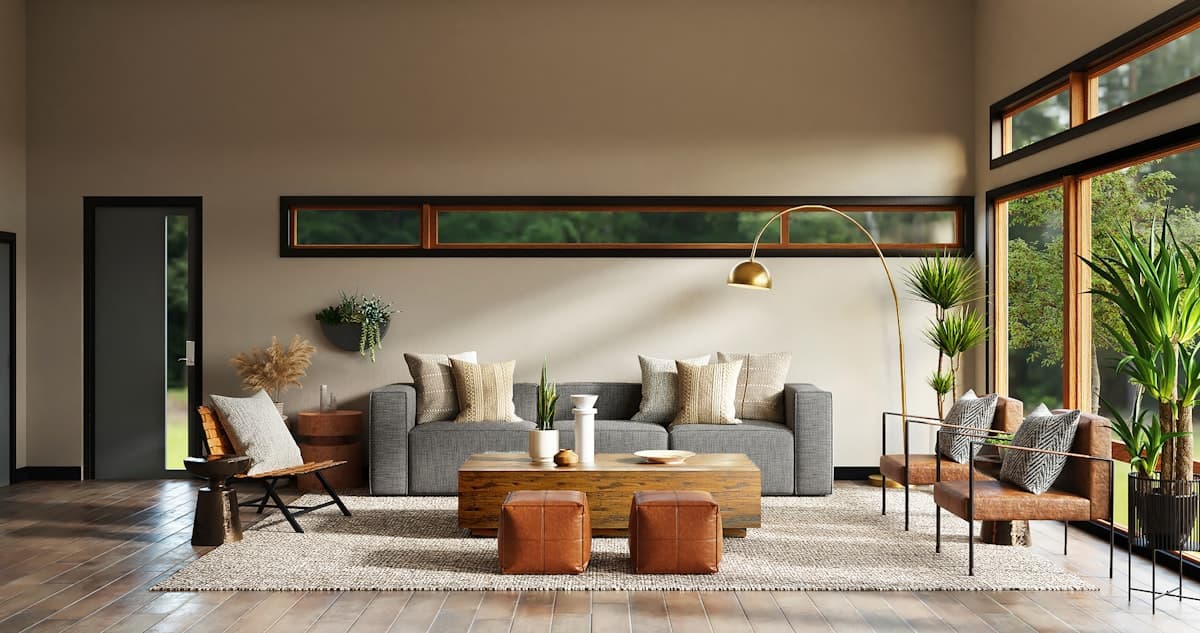
A minimalist palette removes competition between surfaces. Warm whites, bone, greige, soft sage, pale stone, and muted ash tones create rooms that recede visually — allowing architecture and light to lead rather than décor. AI renders colour relationships accurately. You can test warm white against your existing oak floors versus cool white against the same floor and immediately see which creates visual harmony.
2. Clean Lines and Architectural Simplicity
Minimalism emphasises structural clarity. Furniture with exposed, visible legs creates perceptual lightness. Low-profile sofas and beds reduce visual mass. Frameless or handle-free cabinetry keeps surfaces uninterrupted. AI visualises these distinctions clearly.
3. Functional Furniture Selection
Every piece in a minimalist room should justify its presence through use. Not decorative use — actual daily function. AI helps you test whether multi-functional furniture maintains a clean visual profile in your specific room or starts to look utilitarian and cluttered.
4. Open Space and Visual Breathing Room
Negative space — the deliberate absence of objects — is as important as the objects themselves in minimalist design. AI helps you reduce furniture density iteratively. Generate a version of your room with 20% less furniture than you currently have. Then 30%. Find the threshold where the room stops feeling intentionally open and starts feeling sparse.
5. Texture Over Clutter
Minimalism is often mistaken for an absence of personality. It isn't. It replaces decorative clutter with material depth: a linen cushion with visible weave, a chunky jute rug, a matte plaster wall, rough-hewn travertine, brushed linen drapery. AI renders material textures with accuracy in 2026.
6. Hidden Storage and Smart Layouts
Minimalism fails when objects accumulate on visible surfaces because nowhere else exists to put them. AI shows you where hidden storage could be introduced: built-in seating with lift-up bases, full-height wardrobes with flush doors, under-stair storage configurations, recessed kitchen cabinetry.
Style Variations AI Can Generate
Scandinavian Minimalism
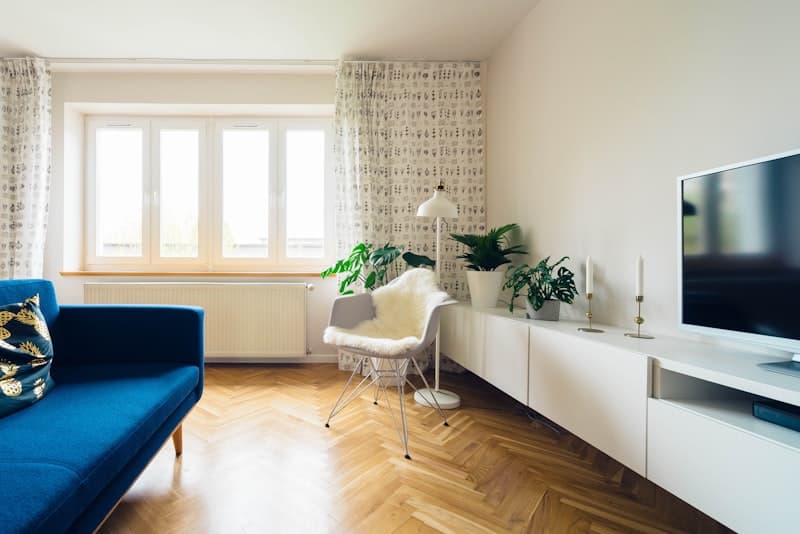
Scandi minimalism is defined by warmth within restraint. Light ash and birch woods, white and off-white walls, cosy layered textiles (wool, sheepskin, linen), and functional furniture with a quiet human quality. It's the most livable minimalist style — never cold, always considered.
Japandi (Japanese-Scandinavian Fusion)
Japandi is currently the most requested minimalist style globally in 2026. It blends Japanese wabi-sabi with Scandinavian functionality and warmth. The palette runs slightly warmer and earthier than pure Scandi: muted ochre, warm grey, soft sage, natural linen. Furniture sits lower. Profiles are quieter. Natural materials carry the decorative weight.
Modern Luxury Minimalism (Popular in UAE)
This is the dominant residential style in Dubai and across the UAE in 2026. It takes minimalism's restraint and introduces material luxury: Carrara marble surfaces, brushed brass hardware, statement pendant lighting, cashmere and silk textiles, and custom furniture pieces with architectural presence. It isn't cold. Warm whites, bone, and camel tones create a sense of enveloping comfort.
Contemporary Urban Minimalism
Contemporary urban minimalism dominates major US cities — New York, Los Angeles, Chicago — and major European metros. It's cleaner and colder than Japandi, more material-varied than Scandi, and less overtly luxurious than UAE-influenced minimal. Concrete, glass, and matte black accents sit alongside white walls and warm wood elements.
How to Generate Minimalist Designs Using AI: A Practical Walkthrough
Understanding how AI extracts spatial information from a single photograph helps you provide better input.
- Upload a clear, clutter-free photo — daylight, level camera, from the corner or doorway
- Select a minimalist style parameter — Japandi, Scandinavian, Modern Minimal, or Arabian Luxury
- Set lighting preference — warm versus cool lighting dramatically changes how minimalist palettes read
- Adjust furniture density — minimalism by definition requires fewer pieces than most default AI layouts suggest
- Refine for storage integration — identify where built-in or concealed storage would appear
- Compare at least four variations — Japandi vs Scandi vs Modern Minimal in the same room
- Extract a shopping plan from the output — identify the five to eight pieces that define the generated design
Can AI Truly Understand Minimalism?
AI understands minimalism as a visual and spatial system — clean lines, reduced object count, neutral palette, material contrast, open floor area. What it doesn't understand is your personal relationship with space: how much storage you genuinely need, which objects carry meaning. Use AI to establish visual direction. Apply your own judgement about what "minimal" means for how you actually live.
Is AI Minimalist Interior Design Suitable for Small Apartments?
Yes — and small apartments benefit more than larger homes from minimalist AI visualisation. In a 280 sq ft London studio or a 350 sq ft Dubai apartment, the margin for error is small. Every piece of furniture either contributes to or detracts from the sense of space.
Common Mistakes When Using AI for Minimalist Design
1. Over-simplifying into sterility — Removing all decorative objects creates a room that looks staged for sale, not lived in.
2. Ignoring texture layering — Without texture, a neutral palette becomes a blank wall.
3. Choosing furniture for looks, not practicality — Beautiful furniture that frustrates use doesn't belong in a minimalist space.
4. Ignoring lighting — A minimalist room with harsh overhead lighting loses all warmth.
5. Trusting AI dimensions blindly — AI proportions are visual guides, not verified measurements.
6. Applying the same approach regardless of climate — Minimalism in a sun-drenched Dubai apartment looks very different from minimalism in a north-facing London flat.
FAQ: AI Minimalist Interior Design
Is AI minimalist interior design accurate?
Yes. Modern AI tools achieve 96–99% spatial accuracy from a well-taken room photograph. Always verify furniture dimensions before purchasing.
Can AI generate realistic minimalist layouts?
Yes. AI generates photorealistic minimalist layouts that show furniture curation, open floor space, texture layering, and palette combinations in your actual room.
Is AI good for small apartments in London?
AI minimalist design is exceptionally well-suited to London flats — particularly Japandi and Scandinavian styles that perform best in light-limited, compact spaces.
Does AI minimalist design work for luxury villas in Dubai?
Yes. The Modern Luxury Minimalism style dominant in UAE residential design renders accurately in AI tools.
Are AI minimal decor ideas free?
Free tiers of AI interior design tools provide enough functionality to generate meaningful minimalist room concepts without payment.
Ready to Transform Your Space?
Upload a photo of your room to Decory, select Japandi, Scandinavian, or Modern Minimal, and see your space stripped back, edited, and refined — photorealistically — in under 30 seconds.
Try Decory AI Now